
Celluloid Princess
Project type: Fiction Short
Project status: Development
Writer/Director/Producer: Salomé Sowa
Director of Photography: Riede Dervay
Line Producer: Gianluca Umaña
Art Director: Tristan Zhu
Email: [email protected]
Website: https://www.salomesowa.com
Instagram: @fairyfangfilms
Help independent filmmakers tell their stories.
Make a donation to Celluloid Princess today.
Film Independent’s Fiscal Sponsorship program opens the door to nonprofit funding for independent filmmakers and media artists. Donate today and help bring Celluloid Princess to life.
Logline
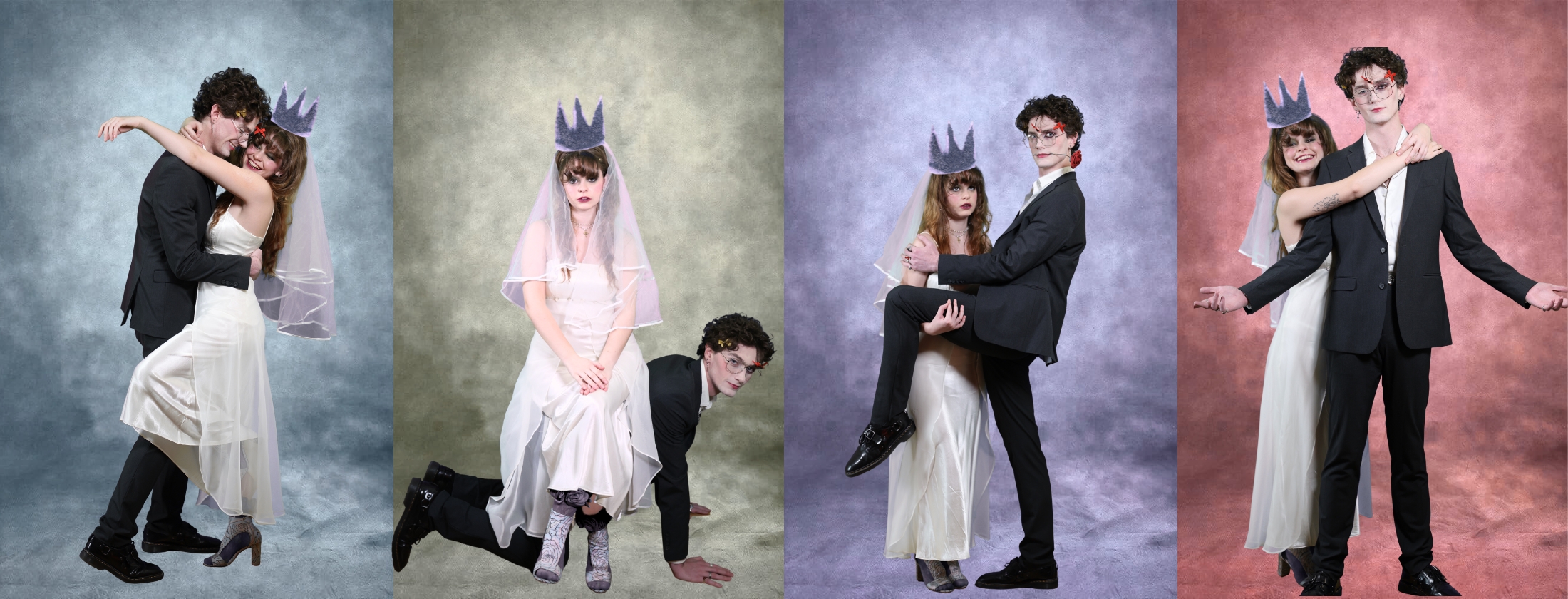
Lou believes she’s meant for the stars—raised on movies and daydreams—but instead, is stuck in arrested development with her overbearing mother. When the photographer next door offers her a chance at love and escape, she learns that this kind of attention comes at a price—and that the cost may be out of her budget.
Synopsis
Celluloid Princess is a chamber horror-dramedy set in 1985 New York. The film follows Lou, a sheltered young woman raised under the claustrophobic care of her agoraphobic mother. Confined to their crumbling apartment—both protective nest and suffocating panopticon—Lou has been conditioned to fear the contaminating world beyond their front door.
When Henry, the next-door neighbor, moves in, he’s both her exit and entrance. A photographer whose charisma masks deep instability, Henry sees the world in images—and Lou as material. Their first encounter captivates her: Henry takes Lou’s photo. His gaze makes her real– alive. But performance demands sacrifice, and the cost of attention is higher than she understands.
At home, news drones on—Reagan’s “Bitburg” speech, an old Mae West film, and a sitcom rerun. Lou prepares supper, just beyond the frame of an Epinephrine pen. Mother avoids her. Lou showers. Water loops. A mosquito buzzes. Lou drifts, injuring herself. Mother rushes in, nursing her wounds.
The next day, Henry arrives with “condolence” cookies, asking to schedule a session. Lou steps into the hall and kisses him—the point of no return.
That night, Lou listens to Henry “engaged” next door, disturbed and aroused in equal measure. The following evening, she enters his apartment dressed in cheap glamour, a child’s Jezebel in a pink princess dress. He directs her body. Posing becomes undressing. Lou submits—wanted, desirable, chosen.
As Lou gives herself to Henry for the first time, Mother next door eats a cookie. Her throat closes– allergic. She reaches the front door—the threshold she’s never crossed. Stepping outside, light floods in. She dies halfway between worlds.
Lou returns, reborn and finds Mother’s body. From the other side of the wall: laughter, a door unlatching, Henry and his next “client.” The mosquito lands on the cookie. Lou opens her mouth—hungry.
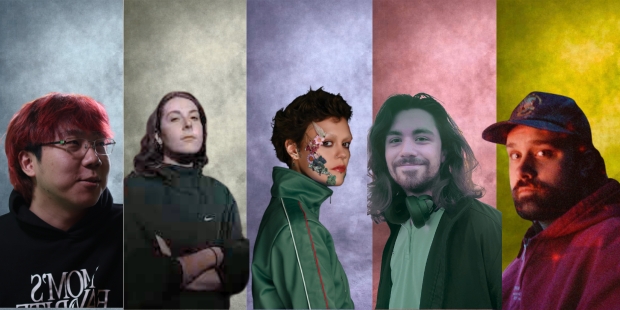
Meet the Filmmakers
Salome Sowa — Co-Writer/Director
Salomé Sowa (they/them) is an award-winning writer, director, and multimedia artist based in New York City. A graduate of NYU Tisch’s Film & Television program and a lapsed Catholic, Sowa’s films explore identity, grief, and embodiment through dream logic, Jungian surrealism, and the grotesque beauty of transformation. Central to their practice is an examination of how images construct subjects and how gender operates as a vehicle for domination, violence, or erasure. Sowa’s affinity for body horror is not incidental; it is political, spiritual, and personal.
Their most recent short film, Blue, Like Green, premiered at the Big Apple Film Festival. Written in the aftermath of their father’s death and inspired by Buddhist teachings on the 49-day bardo, the film situates grief as a liminal state rather than a linear process. Prior to NYU, Sowa wrote, directed, and produced Arcana Six, an LGBTQIA+ coming-of-age short starring Jamila Gray (On the Come Up), garnering over 390,000 views on YouTube to date.
Through their grassroots production company, Fairy Fang Films, Sowa cultivates collaborative, LGBTQIA+-centered creative environments where sensitivity becomes strength and difference is embraced as narrative truth.
Riede Dervay — Director of Photography
Riede Dervay (she/her) is a Director of Photography based in New York City. An extremely visual storyteller, she brings a strong intuitive eye to her work. She is driven by a passion for creating striking, intentional visuals in independent narrative film.
Her cinematography credits include Wedding War (2023), Meek (2024), and The Country They Call Life. Her work has screened at various festivals including NFFTY.
Gianluca Umaña — Line Producer
Gianluca Umaña (he/him) is an award-winning film producer, director, and screenwriter based in New York. An alum of NYU Tisch’s Film & Television program, he has worked across film, television, and documentary projects in a wide range of production roles. He previously completed an extensive producing and script development internship at Protozoa Pictures under director Darren Aronofsky.
His recent producing work earned a Producer Award and a Craft Award for Producing at the First Run Film Festival.
Tristan Zhu — Art Director
Tristan Zhu (he/him) is a filmmaker and creative based in New York City and an alum of NYU Tisch School of the Arts. His work spans directing, production design, editing, and visual storytelling, with a strong emphasis on emotionally charged, visually driven narratives.
Informed by a global perspective shaped by growing up in China and working across languages and mediums, Zhu brings a multidisciplinary approach to his projects. He has directed and production designed narrative and experimental films and commercials, led post-production on documentaries, and edited work for brands, cultural organizations, and independent artists.
Make a donation to Celluloid Princess.
Contact
For inquiries, please contact [email protected].