How YouTube Helped Indie Filmmakers Make Horror Hits ‘Backrooms’ & ‘Obsession’
Pardon us for stating the obvious, but it’s a great time to be a horror fan. In the month of May alone, this year’s box office gave us a new, original horror film every week. Interestingly, two of these films, Obsession and Backrooms, were made by directors in their 20s who got their start on YouTube. Obsession is already a global hit, barreling towards $100 million, and as of now, Backrooms is likely to become another box office hit upon its May 29th release.
The YouTube to theatrical horror pipeline is interesting for several reasons. Filmmakers from all over the world, especially in the independent space, should be taking notes.
For starters, it’s important to note that horror creators have always utilized the Internet as a launchpad. Paranormal Activity and The Blair Witch Project’s respective viral marketing campaigns catapulted those low budget films to historic success. David F. Sandberg and Fede Álvarez posted short films online that led to fruitful careers. The Terrifier films used social media marketing to become a cult hit. Now, Obsession’sdirector Curry Barker and Backrooms creator Kane Parsons are using YouTube as a proving ground for the next wave of horror auteurs. They follow in the footsteps of the Philippou brothers, who built a YouTube following that led to A24’s highest-grossing horror film (so far).
YouTube gives filmmakers the opportunity to prove themselves, no connections or film school required. You can make something for not a lot of money and distribute it for free. This shows investors you know how to work within a budget. It’s also a way to practice your craft and develop your visual storytelling style. Furthermore, your content acts as a proof-of-concept that helps sell your project to buyers. One great thing about the Internet is how it allows niche voices and stories to find a global audience. You can take your specific brand straight to the audience, rather than catering to studio parameters to secure a release.
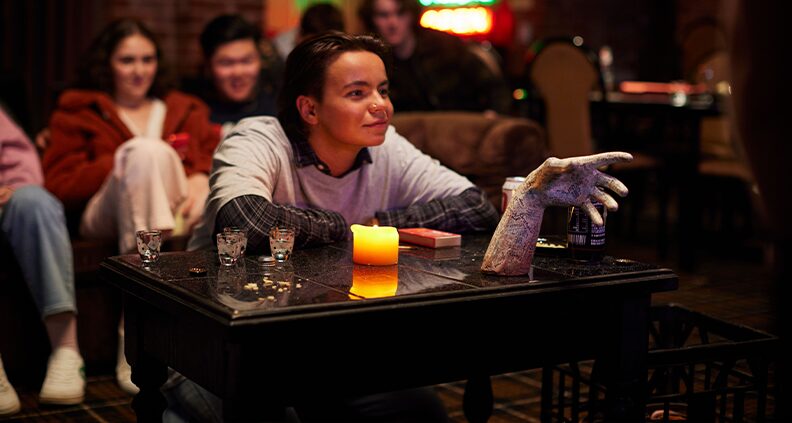
YouTube has always been a distribution platform for filmmakers, but as this latest wave proves, it’s also a way to build an audience. In today’s climate, this is critical. Distributors and producers often speak of the challenges in bringing younger audiences to theaters, but these creators have leveraged the very thing competing for their attention – the Internet – to do just that. Obsession has brought Gen Z to the theater in droves, posting one of the biggest second weekend spikes at the box office. During a Future of Filmmaking panel at Cannes, three experts in film finance discussed what they consider ‘the new reality of financing: rather than evaluating individual films on their artistic merits, investors now need to see a pre-existing relationship with an audience.’ As the careers of Kane Parsons, Curry Barker, and the Philippou brothers showcase, YouTube is a great place to start.
The Philippou brothers grew up in a working-class suburb in Adelaide, far away from Hollywood, where they started posting homemade videos on their YouTube channel RackaRacka. Danny Philippou described it as ‘very specific content for a very specific audience’. The twins channeled their shared love of wrestling and backyard stunts into action-driven videos that highlighted their horror comedy sensibilities. Their first successful video reached 7 million views in a week, and the channel now has close to 7 million subscribers. After making contacts in the Adelaide film scene on the set of Jennifer Kent’s Babadook, the Philippou brothers made their directorial debut with Talk To Me, a film that grossed $92 million worldwide off a $4.5 million budget. This current highest grossing horror film for A24 now has a sequel in development.
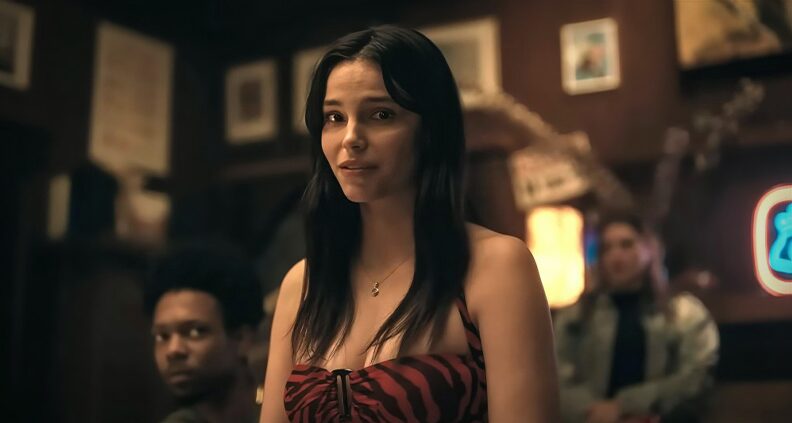
Curry Barker’s stratospheric success began with his sketch comedy group, ‘that’s a bad idea’. Formed with Cooper Tomlinson, the duo found an audience by posting short comedy and horror films on YouTube. Similar to the Philippou brothers, Barker used this as a way to hone his craft, calling it his ‘film school outside of film school’. He made his first feature, Milk & Serial, for $800 over four months. After Barker was unable to secure traditional distribution for the film, he decided to put it up on YouTube, where it became a viral sensation and got him agents at UTA. But it’s his sophomore feature, Obsession, that catapulted Barker to his current status as one of the most in-demand horror filmmakers today. After stoking audiences’ appetites at the Toronto Film Festival, the film was acquired by Focus for $15 million. Released May 15, it’s already grossed over $80 million worldwide off a $750,000 budget. Riding high, Barker is signed up for a new Texas Chainsaw Massacre movie with A24, has a new original film already in post called Anything But Ghosts, and was recently offered $10 million for his next original project by a studio, sight unseen. Talk about bypassing the gatekeepers.
Kane Parsons, the youngest filmmaker of the bunch at 20, calls YouTube a cultural reference point for his generation. Like Barker and the Phillippou bros, it allowed him to develop his creative sensibilities. Parsons posted his viral short The Backrooms (Found Footage), on his YouTube channel Kane Pixels when he was just 16. He followed this up with an entire web series for the concept that showcased his VFX skills and further developed its lore and audience base. This impressive world-building led to a feature adaptation with A24, starring Oscar nominees Chiwetel Ejiofor and Renata Reinsve, which is tracking a $45 million plus opening weekend. Parsons self-taught himself VFX in middle school using— what else— YouTube tutorials. He believes artists need little more than a ‘brain’ to find a way to make something, and wants to see more of this innovative spirit in action. If the current boon of original horror films is any indication, cinephiles around the world would agree.
YouTube is a way to hone your skills, create a product, and find an audience. These filmmakers’ online subscribers are following them to the theater, turning their debut features into unprecedented hits. But the takeaways from their successes are relevant to any filmmaker, regardless of what genre they gravitate towards. If nothing else, YouTube can be a way to find your people. It’s also, importantly, a way to sidestep the traditional gatekeepers guarding a gate that feels increasingly narrow and too crowded to fit through.
The Hollywood Reporter encapsulated it perfectly: “’The moment is here,’ says one studio head. ‘YouTube is blessing these filmmakers and we are struggling to catch up. Right now, it’s about us not being second to the party.’” As usual, the system has realized too-late what creators and platforms like YouTube understood all along: we don’t need permission.
Film Independent promotes unique independent voices by helping filmmakers create and advance new work. To support our work with a donation, please click here. Become a Member of Film Independent here.
Featured Image: Backrooms. Courtesy of A24
Keep up with Film Independent…