
‘You Have the Juice’: Vertical and YouTube Creators Offline at the Film Independent Forum
“You have the juice,” I wrote in big letters and underlined twice in my Film Independent Forum notebook. Your girl loves merch. When asked for advice to filmmakers trying to “break in,” Alexander Ullom (Director, It Ends) reminded us to be steadfast in our creative visions and to remember, “you have the juice.” Something that is often forgotten between pitch meetings, network notes, and an endless sea of scripts waiting for a greenlight. At the Film Independent Forum, the throughline between the digital-focused panels was that these filmmakers didn’t wait for permission from studios and executives. They knew they had something, and carved out a path to bring it to their audience.
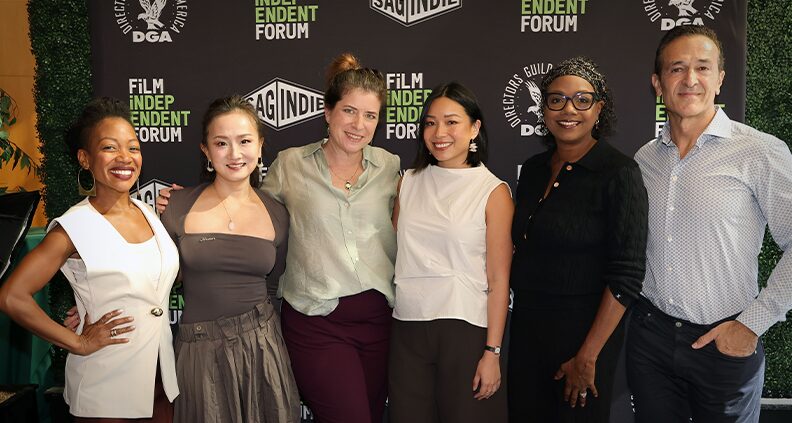
On the vertical storytelling panel, moderated by Wendy Calhoun (Executive Producer; The Rookie Feds, Empire), that meant experimenting with new formats. “Empire took the stage classic The Lion in Winter, with its Shakespearean succession stakes, and set it in the world of hip hop. A familiar classic, reimagined as a prime-time broadcast soap full of pop culture, felt fresh. Microseries play in this same sandbox,” says Calhoun, who also executive produces and directs microdramas.
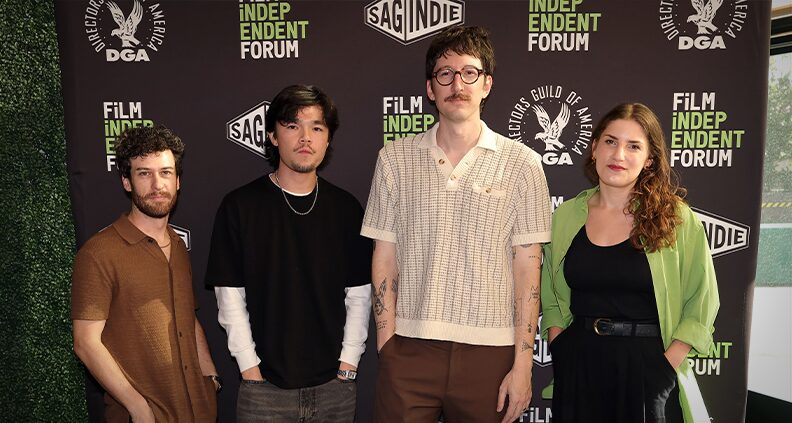
In “Breaking the Big Screen,” moderated by Missy Laney (Film & TV producer), we heard from a generation of filmmakers who had the opportunity to learn, experiment and publish in real time, as part of the “YouTube Generation.” And part of publishing in real time is almost instant audience feedback. Digital creators have the ability to meet the audience where they are at the moment. Which means you can literally give the people exactly what they’re asking for. If you listen. This isn’t to say you should ignore your internal compass, but rather, trust yourself enough to hear the audience without losing what is true for you.
Vivian Wang (Writer; Sleeping With My Billionaire Enemy, Alpha King’s Mistake) tells us that the vertical audience is looking for straight-up entertainment. She finds it both humbling and empowering to know that she’s not creating art for herself. “We’re creating for the audience and we know what they want,” Wang says, adding that after a long day, people are seeking rest and entertainment. “People aren’t watching things on their phone to learn a lesson.”
But people are watching. Lunar Ticks, the bilingual writing team Wang co-founded, has passed a billion views across the series they’ve written and localized, all in about three years. According to Reuters, some 66 million monthly active users in the U.S. are watching microdramas, and the format generated $1.5 billion in U.S. revenue this year. It’s no wonder we’re seeing more and more traditional Hollywood players crossing over to mobile platforms. But aside from the revenue potential, the format also gives storytellers a chance to connect with an audience, and quickly. This is what all digital creators have in common. Katy Fishell (Comedy Writer, Cartoonist) captured an entire generation with her ability to take ideas from a car ride home and turn them into cartoons on social media just days later.
Where traditional development cycles can go on for years, verticals move from page to launch in months. (I’m told the average cycle from ideation to premiere is three!) Tiffany Yvonne Cox (Writer/Director, Leaving Mr. Wrong for Mr. Right; Actor, Reasonable Doubt) spoke about going to the “School of Self” and not waiting for perfection. Cox independently produced her own vertical series to put herself on the map, and now writes and directs microdramas in between acting in broadcast television shows. For most, there are no plans to give up on the horizontal world. Verticals are simply the latest platform.
Now that YouTube has passed its 20th anniversary, it’s hard to remember when it was the new platform on the block. But there was a time when thick lines were drawn between digital creatives and those in traditional Hollywood. Today, an Oscar winner eating hot wings on the internet is almost expected during award season. And starting in 2029, The Academy Awards will stream on YouTube. I ask, only half-jokingly, will TikTok be next?
Dawn Yang (Global Head of Entertainment & Micro-series, TikTok) spoke about how TikTok offers a unique watching experience. “We offer new ways of watching together with people who are not in your social circle, but are people who love the same content as you do,” said Yang. And viewers aren’t just scrolling through, they’re sticking around. Research by Omdia tells us that vertical platforms have surpassed streamers when it comes to mobile engagement. The report states, “U.S. users now spend more time per day watching microdramas on mobile apps than they do watching Netflix, Disney+ or Amazon Prime Video on mobile devices.”
With data like this, one has to wonder what “breaking in” even looks like. Across both panels, the consensus was that no one really knows anymore, because it’s changing beneath our feet. In the digital age, art can move at the speed of technology. By the time you finish reading this article, there will be ten new formats downloadable in the palm of your hand. That being said, the panel audiences still wanted advice on how to break in, even if we have no idea what’s inside the house. Advice ranged from “make movies with your friends” and “they find you when you’re ready” to Mark Duplass’ “The Cavalry Isn’t Coming” speech being mandatory viewing.
Panelists also touched on bad advice. When making his first film, many people told Nicolas Curcio (Writer; Play House, GOAT), “this is your one shot,” but Curcio disagrees. He says that unlike the Eminem song, “you want to give it your all, but it’s never your one shot. There’s a million stories of people who didn’t get it right [on the first try], but then got it right.” Other overrated industry advice included focusing on getting an agent or manager first. The panel widely agreed that having representation is great because they can put you in a room, but that doesn’t guarantee work. Focus on making your materials something you believe in. This is exactly how the YouTubers behind this summer’s horror hits started: making what they believed in and building audiences, who then followed them to the box office.
Where the YouTube panel focused more on transitioning from social platforms to the big screen, the vertical storytellers were more interested in how the mobile screen itself can be the destination. We’re not there yet, but many vertical producers like Elizabeth Dell and Hernan Lopez envision a world where microdramas reach the same cinematic heights that television has. Before David Lynch made Twin Peaks (1990), people said television would never get there either.
P.S. What’s a microdrama, you ask? Check out our last Film Independent article for a deeper dive into what they are, where they came from, and why they’re here to stay.
Find the full panel discussions at Film Independent’s YouTube HERE.
Film Independent promotes unique independent voices by helping filmmakers create and advance new work. To become a Member of Film Independent, just click here. To support us with a donation, click here.
Keep up with Film Independent…