
Case Study: How ‘Thelma’ Made a Universal Film Focused on Seniors
The Film Independent x Humana Shorts Initiative is supporting five Director and Producer teams to produce original shorts that authentically celebrate the vital roles and contributions of seniors to society and raise awareness around the different issues that affect them today. An all-in budget of $100,000 provided for each film.
Applications are now open, and close on October 26, 2026. There will be an extended deadline for Film Independent Members, which will be on November 2, 2026. To learn more about the program, click here.
***
The team behind Thelma (2024) had a choice when it came to selling their film to audiences. “It’s not just for a senior audience. It’s also for middle-aged people for young people, people who can relate to the grandparent characters or the parent characters,” said producer Zoë Worth.
The film is about 93-year-old Thelma Post, who gets scammed into sending her life savings away when she thinks her grandson needs bail money. Once she finds out what happens, she decides to take matters into her own hands and get the money back. The film plays with action movie tropes and puts them in an age-appropriate context for what Thelma and her crew are going through.
We spoke with writer/director Josh Margolin and producers Zoë Worth and Chris Kaye about how they took the film from script to release and what other filmmakers can learn about making a specific film have a broad appeal.
Development and Financing
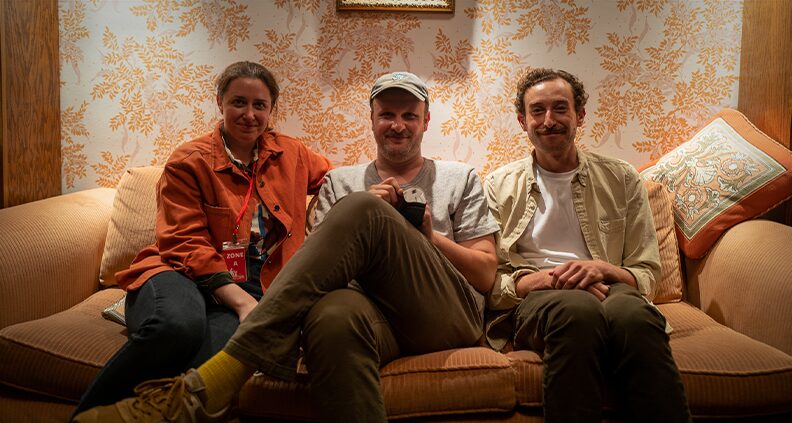
The idea came when writer/director Josh Margolin’s own grandmother almost got scammed. “I started imagining what might have happened if she if she had sent [the money to the scammers] and knowing her, the length she would have gone to get it back,” he said. He brought it to his creative circle, including Zoë Worth and Chris Kaye, and they all immediately responded to it. Once a script was ready, the team sent it to June Squib through connections they had. Margolin and Squib had an initial call that ended with the actress saying, “Ok, I’d like to do it.”
“That really lit a fire for us,” Margolin said. When it came to financing, “I think it was very clear who was in and who is out,” said Worth. The team insisted on having an actress in their nineties in the star role and found partners that aligned with that vision.
Production
Playing with action tropes meant that there would be stunts for the film’s lead performer. “It’s funny because some of the quote unquote stunts in this movie wouldn’t necessarily be fully designated stunts in a movie with a with an actor at a different age,” said Margolin. “Her rolling across the bed for our movie is kind of is dicey… Everything felt daunting because we felt responsible for the safety and well being of everybody while also trying to get the shots that would work and make sense for the movie.
“We tried to make sure we were really well rehearsed, really well covered, and really well practiced. We did very limited takes.”
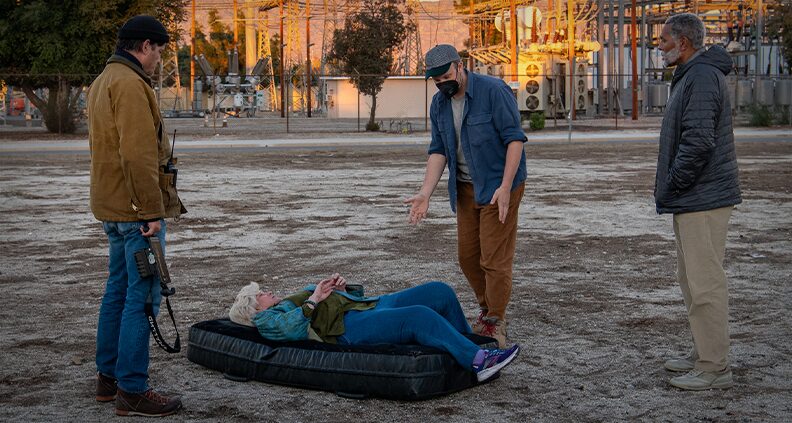
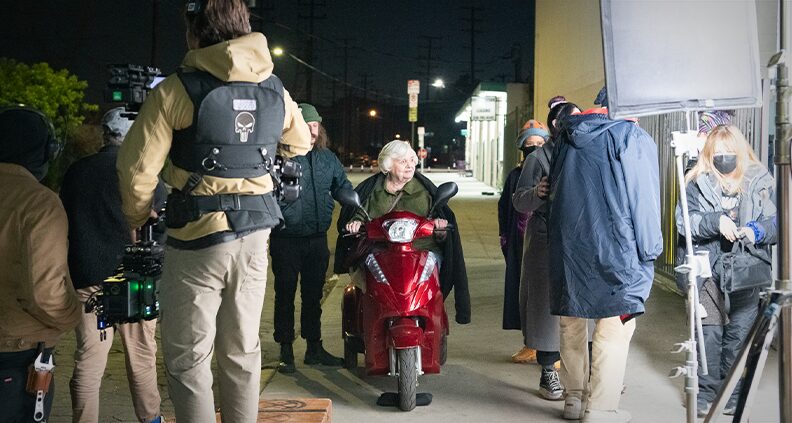
The film shot in L.A. and despite not getting the California tax credit, they made their budget in other ways. The shoot used Margolin’s real grandmother’s house as well as the Motion Picture & Television Fund Retirement Home in Woodland Hills as its main locations, and were able to set dress the locations to double as other places like police stations. When shooting their exteriors, the had a small footprint and used permitting grids strategically so they could get as much variety as possible.
Festivals and Release Strategy
The film premiered at Sundance, and the team ended up going with Magnolia Pictures as its distributer based on its showing at the festival. The team was very conscious of how the film was going to be marketed, which went into that decision. “Whenever there was any conversation where somebody would be pitching us the kung-fu grandma version, we’d be like. ‘No, we can’t go towards that.’ The broadness is not why people are going to go see this movie,” said producer Chris Kaye. Magnolia helped the team tour the film in festivals all over the country. Having June Squib leading a film for the first time in her career also generated organic news coverage.
Advice for Filmmakers with Senior Focused Projects
For a film to be successful, you have to know why you want to tell a story. For the Thelma team, it was Margolin’s real-life experiences with his own grandmother, and the care he had for her. According to Worth, “It’s about giving dimensionality to your lead senior characters and acknowledging who you are as the as the author of said movie.”
“Don’t feel like you’re contorting yourself to take advantage of some opportunity, but you are instead setting out to make something you believe in,” added Margolin. “That guided us in many ways.”
Thelma is now streaming on Hulu and Disney+ and the filmmakers are working on a new comedy set to start shooting next year.
The Film Independent x Humana Shorts Initiative is supporting five Director and Producer teams to produce original shorts that authentically celebrate the vital roles and contributions of seniors to society and raise awareness around the different issues that affect them today. An all-in budget of $100,000 provided for each film.
Applications are now open, and close on October 26, 2026. There will be an extended deadline for Film Independent Members, which will be on November 2, 2026. To learn more about the program, click here.
Film Independent promotes unique independent voices by helping filmmakers create and advance new work. To become a Member of Film Independent, just click here. To support us with a donation, click here.
Keep up with Film Independent…