
Disc Jockeys: Music, Coffee & Movies at Hamden’s Best Video
‘Disc Jockeys’ is a column featuring video stores across the country that provide their communities with access to DVDs, Blu-Rays and VHS (that often can’t be found anywhere else), in which we explore what it takes to survive as a physical media store in the age of streaming.
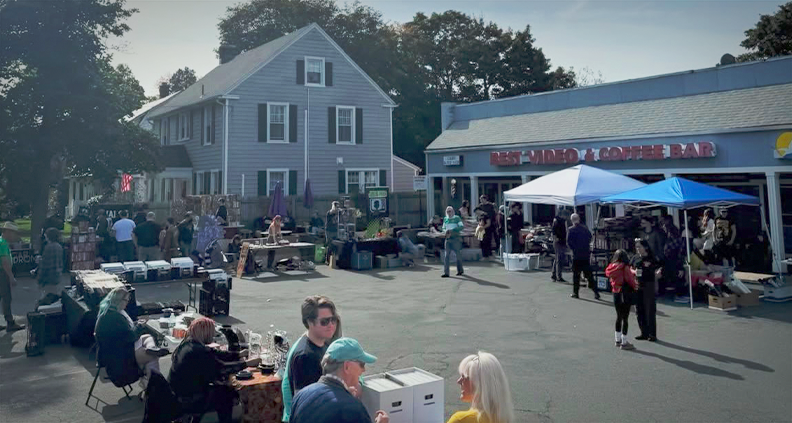
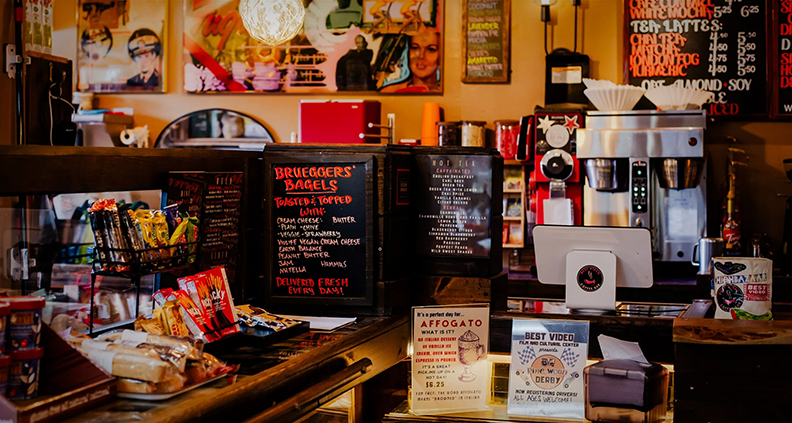
When running a smaller market video store like Best Video in Hamden, Connecticut, one thing that’s crucial is being a community hub. There are many ways to do that beyond providing films for the local cinephile population. Yes, there are screenings and meetups, but Best Video brings the energy and community by also running a coffee shop inside the store and having live music nights. There’s even a Kids Room where children from the nearby elementary school have a safe after-school space. It really does take a village.
Rob Harmon is the Video Archive Director at the non-profit video store, and he spoke with us about creating a space that, according to some residents, is one of the reasons people wanted to live in Hamden in the first place.
Can you give us a little background on Best Video?
Best Video was a video store in Hamden, Connecticut, just outside of New Haven, that became a non-profit in 2015. I started working here in 2010, and the writing was on the wall: our traditional model just wasn’t cutting it. Year after year, things got quieter. The first couple of Christmases I worked, in 2010 and 2011, we had huge lines of people right up through Christmas Eve. By 2012 and 2013, people were staying away, mainly because of streaming.
Around that time, we started hearing about video stores elsewhere going non-profit. Vidiots was the first one I remember. Concerned customers rallied around the idea, a board was formed in 2013 or 2014, they met with lawyers, filled out the paperwork, and we were approved as a non-profit in November 2015.
What steps did you take to build the community back up and make Best Video an appealing destination again?
It’s been a multi-faceted effort. A lot of people say that one of the reasons to live around here is Best Video, and they mean it. Before we became a non-profit, we started doing live music, which drew in a completely different demographic. We opened our own café — originally there was an independent coffee shop here, but they moved in 2011 or 2012, and our original owner opened his own. That’s added a lot of the energy you’d notice if you walked in.
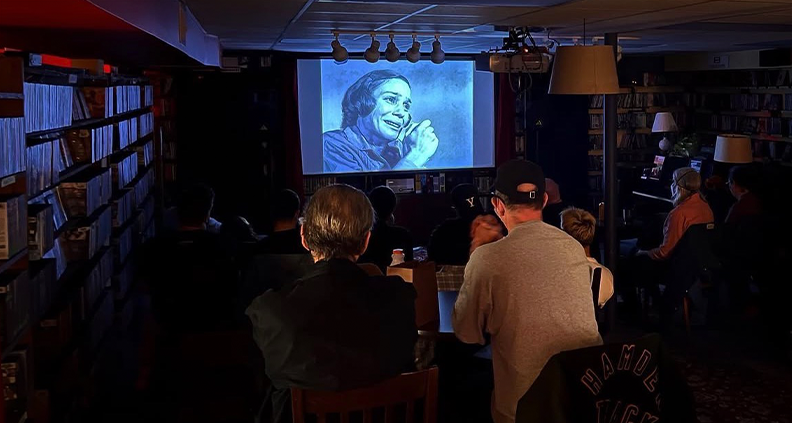
We also started doing regular screenings, which we should have been doing all along. We have a nice projector, and while it’s not the biggest space, it’s a lovely intimate setting.
We now have elementary school kids who walk over after school and hang out in the kids’ room. It would have come to nothing if concerned parties hadn’t come together during those dark days of 2012–2013. We also introduced a membership model, which has been hugely important. We now have somewhere between 600 and 800 paying members. I’d worked at the Film Forum in New York City, so I’d seen firsthand how a membership model can create a solid financial base for a nonprofit.
What do you love most about Best Video?
I love having a place where all of these movies live. I tell people to think of Best Video as a crowdsourced movie collection. If you came to my house, you’d see a decent but modest collection and think, ‘Oh, Rob likes movies’ — but truthfully, most of my collection is right here. And once a film is on these shelves, it’s somewhat permanent. That permanence matters to me deeply, especially now. Best Video is the antidote to the narcotic experience being sold to us, and I feel proud of that.
Tell me about the collection — how many titles do you have, and what do you look for when adding new ones?
My official title is Video Archive Director. I deal with the movies, which is great because it’s what I’m cut out to do. We don’t have an exact count, but it’s at least 40,000 — probably closer to 45,000 or 50,000. An updated database would give us a precise number, but the one we’re currently running was built in the 1980s.
For new releases, we generally try to get one DVD and one Blu-ray of anything major, and more copies of titles we expect high demand for.
I also maintain wish lists based on member requests, and we have a system where I note who’s asked for something and follow up with them when it comes in. People donate titles too, which helps. We try to encourage members to return in-demand movies quickly — when David Lynch died, for instance, we reached out asking people to get his films back so others could watch them.
How does Best Video fit into the local Connecticut film scene?
There are film schools at Yale and Wesleyan in Middletown, and we get people who come to film here. We’ve hosted short films and documentaries, and people screen their work here. We’ve been involved in local film festivals and have worked with film students before the pandemic — something we’d like to do again. Local filmmakers often donate a copy of their film to us, and we have a Connecticut section in the store where we’ll place it. We get regular requests from people looking to screen their movies here, and it really is a nice, intimate setting for it.
Why are video stores still important?
Physical media is crucial to any sense of permanence — an idea that’s being pushed aside for so many reasons. I genuinely feel that owning and lending physical media is becoming a kind of political act. The ability to hand a friend a movie and say, ‘You really need to see this,’ and have them pass it on — that’s powerful. These are records. A disc is compact, it can move from house to house, and it’s not going anywhere. If it breaks, you can replace it. We’re being sold a lie that paying $10 or $20 a month to streaming services gives you access to something, when really your money is just going out the door and you’re getting nothing permanent in return. It’s a bait and switch, and Best Video is the antidote to that.
For over 40 years, Film Independent has helped filmmakers get their projects made and seen. The nonprofit organization’s core mission is to champion creative independence in visual storytelling and support a community of artists who embody diversity, innovation and uniqueness of vision.
Keep up with Film Independent…