
How Two Filmmakers Made a Festival Hit for Under $27,000
The old low-budget mantra is “Beg, borrow, [REDACTED].” That’s all fine and good, but what do you really need to borrow, and how exactly do you get people to care about your film when it feels like you have to beg for people’s attention these days?
At a live edition of Film Independent’s Filmmaker Tuesdays titled “NanoWave: The Microbudget Film (r)evolution”, presented in partnership with HieronyVision, writer-director Joe Burke and co-writer/star Oliver Cooper sat down with moderator Felix Werner to break down exactly how they made their feature, Burt, for $27,000.
The origin of Burt begins with a real person— Burt Berger. Burke and Cooper had known Burt for years, spotting him playing music at an open mic, and after casting him in a short film, they knew they had something. “Everyone who saw this short film was like, who is that guy? He’s amazing,” Cooper recalled. From there, the question became: how do we build a movie around his life? When Burt was later diagnosed with Parkinson’s, around the same time Burke’s own father received the same diagnosis, the filmmakers knew they had to act.
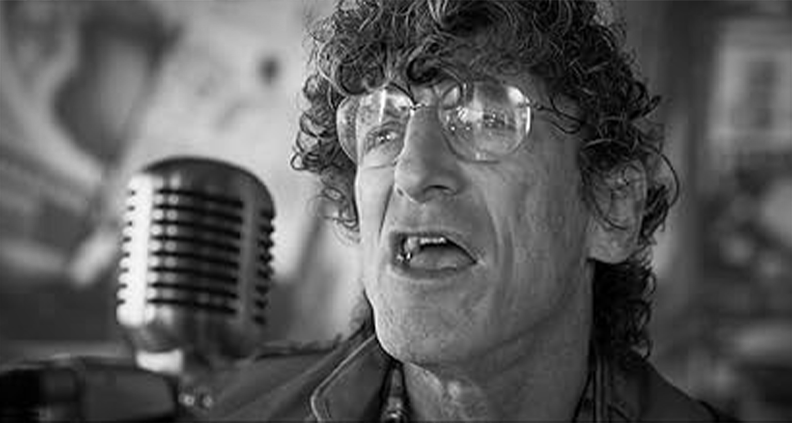
Knowing they had a limited budget, Burke and Cooper went for a location they knew they could get cheap: Burt’s actual house, where he lived with his real-life roommate, Steve, who also ended up in the film. “I have location first, story second,” Burke explained. “I always say, if you have access to location, and you can control the location, you can accomplish anything.”
Cooper put it even more directly: “I got $7,000. Let’s make something.”
The $7,000 Film (Plus $20,000 in Post)
That $7,000 was raised from Cooper’s mother, sister, and self, and covered seven days of shooting. The pair didn’t pay themselves. The sound recordist got $250 a day. The DP, Daniel Kenji Levin, a film school friend of Burke’s, worked for $50 a day in gas money, taking back-end points instead. Steve, Burt’s roommate, was paid $100 a day for use of his house. Two Canon cameras were borrowed from friends. There was minimal lighting and craft service was served out of the trunk of Burke’s car.
To make things easier on the production, the film was shot entirely in chronological order. “If you’re shooting in order, you can write, if you have to, along the way,” Burke said. This also made continuity easer, because without a script supervisor, the team had to rely on each other to make sure things were accurate from shot-to-shot and scene-to-scene.
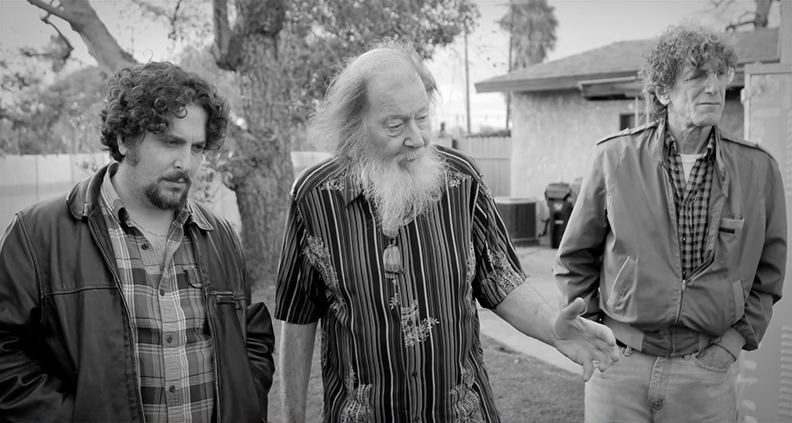
Burke didn’t write a traditional script. Instead, he created a detailed 15-page outline with every beat mapped out — giving Burt and Steve room to speak in their own voices without memorizing dialogue. “It didn’t look pretty” Burke said, “[but] we knew what we needed. No one saw [the outline] but me, Oliver, and our DP Kenji.”
After picture lock, Burke and Cooper raised an additional $20,000 from a family friend in Ohio to cover post-production: a composer, sound design, festival fees, and a poster. Total cost, all-in: $27,000.
The Festival Run: Big Wins After Going 0-for-28
They finished the film in December 2023 and submitted to every major 2024 festival — Sundance, SXSW, Tribeca etc. They proceeded to go 0-for-28. Not a single acceptance. “My mom was like, ‘You gotta move back to Ohio, sleep in the basement,'” Burke said.
Then in March 2025, they got into Cinequest. They won Best Comedy Feature. Two weeks later at a Phoenix festival: Best Picture. Two weeks after that in Florida: a Special Jury Award. “In six weeks we go from zero for 28 festivals to our first three film festivals. In 2025, we won all three,” Burke said. “Something changed. Something shifted.”
From there, Burke stopped paying festival submission fees entirely. He emailed festivals directly, attached their trailer, explained the personal nature of the film, and asked for fee waivers. Many said yes. And instead of rushing to streaming, he cold-emailed independent arthouse theaters across the country, offering a 50/50 revenue split. To his surprise, many programmed the film. “I emailed every independent arthouse theater in the country,” Burke said. “To my surprise, a lot of them said yes.”
But How Did They Really Do It?
When it came to advice for the audience and any other potential filmmakers, the team had a few points they wanted to get across.
Always shoot two cameras: Burke’s setup meant he could film both sides of a conversation simultaneously, giving him maximum flexibility in the edit with non-professional actors. “I’ll do that probably for almost every movie I shoot now,” he said. “I loved that freedom as an editor, especially with non-actors, to actually have the conversations on both sides being filmed.”
Know how to edit… or know someone who does: “If you’re a filmmaker, you have to know how to edit, or your best friend’s got to be an editor,” said Cooper. Burke cut the film himself, and because he was editing as well as directing, he knew when he had enough coverage for a scene and could move on after only a couple of takes.
Find something that only you can make: “If you’re going to do micro-budget, find something personal that it’s only something that you can do,” said Burke. Cooper emphasized how important drive is for a project that turned out to be a multi-year journey: “You have to find the passion in it.”
This was part one of NanoWave: The Microbudget Film (r)evolution. There will be six sessions throughout the year continuing the conversation on micro-budget filmmaking. The next session will be virtual and will be on April 14th. Check the Events page for more info soon.
Film Independent promotes unique independent voices, providing a wide variety of resources to help filmmakers create and advance new work. Learn more online and become a Member of Film Independent today.