
Member Lens: Daniela Taplin Lundberg on Producing, Podcasting & ‘Club Kid’
In our Member Lens series, we’re spotlighting a cross-section of current Film Independent Members to see how they got where they are now, what they’re up to now and what being a part of Film Independent means to them.
***
For some people, their path becomes so clear it just jumps out at them. For producer and Film Independent Member Daniela Taplin Lundberg, that was the case when she visited her stepdad, writer/director David S. Ward, on set one day and found herself surrounded by frogs brought in for the days’ scene. The sight amazed young Daniela, who decided that day that she wanted to be part of whatever magic that made that happen.
She went on to found Stay Gold Features and produce classics like Beasts of No Nation, The Kids Are All Right and Honey Boy. Along with being a powerhouse producer, she started her own podcast, Hollywood Gold, that tells listeners what it took to get some of their favorite movies made, along with the producers and filmmakers who made them.
We spoke with her about the trials and tribulations of being an indie producer, as well as how Film Independent is the community that she found that supports and celebrates the magic that makes indie films happen.
I wanted to start off with a little bit of your background and what first drew you to the movies.
My mother, my father, and my stepfather were all in the film business, and I grew up in LA in the ’80s. One of my earliest memories: my stepdad wrote and directed Cannery Row, which is adapted from a John Steinbeck novel. He had written The Sting when he was 27, and then MGM gave him some money to make Cannery Row with Nick Nolte and Debra Winger. Anyways, I was four years old, and I remember going to MGM Studios. They had this scene where some of the supporting characters were catching frogs, and they had literally thousands of frogs, all live, on the stage.
I had no idea this was possible. I got to take home two frogs in a Styrofoam cup, and the top came loose and one of the frogs jumped out, and I was just hooked. I was like, “Whatever is happening here is magical.”
I fell in love with the old-school style of filmmaking and filmmakers. My dad would bring home early scores for movies, and he’d let me watch casting tapes and weigh in. I remember he made The Program when I was in early high school, and he was deciding between Tupac Shakur and Omar Epps for one part. I was like, “Oh, they’re both so different, and they’re both so good.” To me, it was so exciting to see words spring off the page. So I always knew I was going to do it. I was in love with the art of filmmaking and proper movies. Those are the movies I try to make.
What was your first job in the industry, and what was that experience like?
I decided to move to New York after college. That was the era of Miramax and Fine Line and October Films. I had the option to go intern at Miramax or go be a PA on a tiny $300,000 film. Someone had told me, because I wanted to be a producer, that the best way to understand what producers do is to be a PA, because you can see all the departments and where all the money’s going.
So we shot down on Broome Street. It all took place in one room. It starred Amanda Peet, who everyone said was going to be a big deal, and Ione Skye, who played one day. And I did everything. I cleaned toilets.
I remember, I didn’t know what sides were. Someone said, “Go make sides from this script,” and I was like, “What are sides?” I ran to the Kinko’s and made sides. I was a jack-of-all-trades. I got the walkie taken away on day five because I just kept chatting on it. You learn so much in that job.
But that’s the magic of filmmaking. When it’s funny, or when it works, it’s great, and you’re just happy to be a part of it. I’ll never forget cleaning the toilets. I was like, “Wow, PAs really do just have to do whatever they’re told.” But it’s the best way to figure out what you ultimately want to do and what direction to go in.
Tell me what you thought was cool about producing back then, and why you like producing today. What’s the appeal for you?
My mother was a great character actress named Rosana DeSoto. She’s most well-known for playing Ritchie Valens’ mother in La Bamba. She was in Stand and Deliver. But the thing I noted about actors is they’re always waiting for the phone call. Half the time, they don’t even know why they didn’t get the job. I was just like, “This is such hard work.” She’s so talented, but there’s no control in it, right?
Then my stepdad was a writer-director, which was a whole other set of skills that required such focus. I wasn’t a good enough filmmaker or writer myself, but my biological dad, John Taplin, was a producer. He started out as a road manager for Bob Dylan and The Band, and then he came to LA. He was like, “I’ve been told I’d be a good movie producer because I take charge.”
He was introduced to Martin Scorsese, who was editing at the time. Scorsese had four scripts, and one of them was Mean Streets. My dad liked Mean Streets. He didn’t know you weren’t supposed to put your own money into a film, so he put in a little money he’d saved from his rock-and-roll touring days, and then he went out and raised the rest.
They made Mean Streets in 19 days, 16 of which were in LA and three of which were in Greenwich Village, where they did some exteriors. My dad just believed in this guy, and in De Niro. De Niro was totally discovered on that. And the movie just took flight. He didn’t know what he was doing. But the romance of that, discovering a talent like that and being a part of it and helping launch it, that was it.
So I always knew that producing was the thing I could do. I wanted to launch voices I believed in and make great film, make great art. It sounds corny, but that’s really what it is.
I want to talk to you about your podcast. What made you want to start the podcast, and what have you learned from it?
I was a huge fan of the podcast How I Built This, which was about building great companies. I’d listen to the Warby Parker story or the Tate’s chocolate chip cookie story, and I was always intrigued by the course of one founder’s dream. And I said, “I feel like there needs to be a version of this for movies, from the producer’s perspective.”
The producer tends to be the one who’s there at the very nascent stage and takes it all the way through to the end. They have a perspective on the filmmakers and the financiers, and what the studio thought, and how the shoot went. They’re the CEO of the movie.
I though, “I know enough producers that I could pack a season, at least with my friends.” We’re the little guys that no one ever cares about. So we just started it out of our office with a couple of episodes, and people really seem to love it.
Most great films almost don’t get made, and that is the thing I’ve learned most. You listen to the story of The Fighter or Arrival or all these great movies, and there are always two or three moments where it almost went away. Most of the time, it’s through the fortitude of the producer that they stay on track.
It’s enough to make me put my head down again and keep going, because sometimes I’m coming off of a Zoom where I’m like, “Why do I do this? I’m too old to do this bullshit.” And then you realize, “No, but you’re making something great.” And probably the person on the other side of the call is just trying to make something great too, and maybe you just don’t agree. So you have to have a lot of patience and strength of will. That’s what the podcast does for me.
When you’re meeting with a writer-director you haven’t worked with before, what makes you want to attach yourself to a project and say, “I want to be here for the long run with this person or this project”?
For me, it’s always two things. One is I want to feel that there’s a freshness and a novelty to whatever I’m being pitched. I want the director to look out into the world like an audience member and pitch their own movie to that audience. If the audience is like, “Ooh, that feels unique, that feels sticky,” then I’m probably going to lean in. If you just keep following the same thing that’s been successful for ten years, you’re never going to make anything interesting, right?
The other thing is I love it when a filmmaker has a specific vision. I almost prefer the overly passionate person to the person who’s just looking for other people’s opinions. The overly passionate person may irritate me most of the time, but I love that they have a clarity, so I don’t need to worry about it. The worst thing is when a producer is second-guessing and trying to fix things for the director.
I remember when I was working with Cary Fukunaga on Beast of No Nation, we were early in the edit, and the film was too long. I was working with my partner, Amy Kaufman, who had worked with him before. It was the first time I had worked with him, and she goes, “Well, I trust him. I trust him more than I trust myself.” That was a light-bulb moment for me. The really great filmmakers are going to look for other opinions and for collaboration, but it’s their creative ship. I love when I can trust my filmmaker, and I’ve had the benefit of working with a lot of great ones.
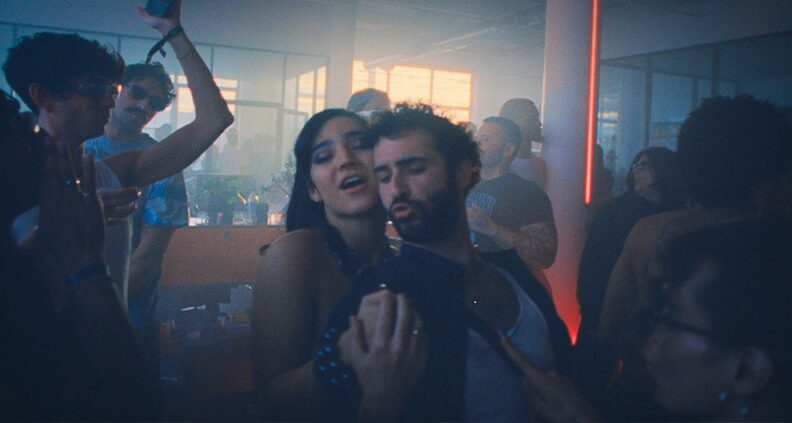
Tell me about your latest project. What was your involvement with Club Kid and how did that come together?
I’m so excited about that movie. I’m an executive producer on it. I did not carry that film on my back. But one of my dear friends in the industry is Ryan Heller, who runs Topic Studios. I had produced a movie for Topic called Nanny, which we partnered on.
We went out to lunch last July and I was like, “What do you have going?” He pitched me a couple of movies, and then he talked about Club Kid. He said, “We’re doing this little movie from this first-time filmmaker named Jordan Firstman.” And I was like, “Oh, I love Jordan Firstman. I think he’s really smart.” Then he pitched me the arc of the movie.
I guess I gravitate toward big films that tend to have child characters as a lens into the world. If you look at Honey Boyor Beast of No Nation or What Maisie Knew, that is true for all those films. So I instinctively gravitated to Club Kid. I read it overnight and called Ryan up on Monday. I said, “Ryan, we love it. I love it. Please let us be a part of it.”
I inherently trust Alex Coco, who’s the lead creative producer. I love Anora so much. I’ve met him a couple of times, and I’ve interviewed Alex a couple of times on the pod. I just think he’s as creative as he is producorial, which is always my favorite kind of producer. I saw early cuts of it, and it’s rare to see an early cut and just be like, “I’m completely on board with the ride.” It was really a world that he inhabited, so it felt so authentic. And then he layered in this lovely story of bringing this kid into his life, which forces him to grow up. I inherently love those stories.
That’s how it happened, and the rest is history. Cannes was insane, and they’ve been on this whole run through the film festivals. I got to celebrate with everyone at Toronto, and that was so fun. I’m so excited to see how audiences respond to it.
When did you first become aware of Film Independent and what made you want to become a member?
It’s been a part of my entire film life for as long as I can remember. I think one of the first films I did was Lonesome Jimwith Casey Affleck and Liv Tyler. From the get-go, Film Independent and the Spirit Awards have inhabited the very fabric of the way I make movies. I’ve never known any other way than boots on the ground, make it happen, which I feel is very much the Film Independent approach. I’ve admired the organization for so long because of that.
My mom hasn’t won many awards, but one of the awards she won was one of the first Spirit Awards ever. She won for her role in Stand and Deliver, and she beat out Julia Roberts in Mystic Pizza. That’s still one of her big calling cards, that she beat Julia Roberts. So Film Independent and the Spirit Awards have been a part of every step of my career. It’s such an important part of independent filmmaking and independent voices. I’m so grateful that it exists, because it’s helped me so much.
What’s your favorite part about being a member?
When I go to an event or the Spirit Awards, it just feels like family. We’re all people who roll our sleeves up and once in a while throw on a nice outfit, but mostly it’s about doing the work and making great art. That’s a little different from the glitz and glamour of the more upscale Hollywood organizations. Don’t get me wrong, I love that too. But I feel Film Independent is all about the right things, what the film business should be about: doing the hard work and pushing for great art and doing it in a way that’s accessible to everyone who wants to participate.
Film Independent promotes unique independent voices by helping filmmakers create and advance new work. To become a Member of Film Independent, just click here. To support us with a donation, click here.
Keep up with Film Independent…