
Member Lens: Spirit Award Winner Anne Carey on Producing, Developing and Making the Best Possible Film
With the Film Independent Spirit Awards in just a couple weeks, we thought it was a good time to focus our Member Lens series on a Member who is a past Spirit Award winner.
Anne Carey grew up watching both blockbusters and art-house movies with her parents. She started out in art school and decided to go into film and transferred to NYU, where she found her skillset best fit producing.
Her big break as a producer came with HBO’s The Laramie Project while she was working with Good Machine. Since then, she’s been a mainstay in the indie film world, producing hits like Lost Girls, Adventureland, and 20th Century Women.
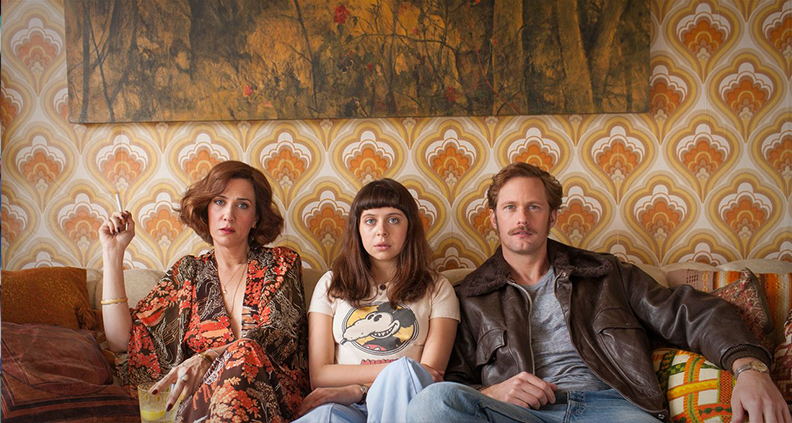
In 2016 she won Best First Feature as a producer for Marielle Heller’s Diary of a Teenage Girl. She’s continued to work with Heller on films like Can You Ever Forgive Me and last year’s Spirit Nominee, Nightbitch.
We spoke with her about what it takes to put together a Spirit Award winning film.
What was the thing that drew you to movies?
I grew up in the Midwest. And as a kid, we would just go to the movies a lot. My parents liked the movies. My mom would take us to go see everything from Marx Brothers movies to blockbusters. We just went to the movies a lot as a family.
What was your first job in the industry?
My first internship, I worked for a small production company that made car commercials in New Jersey and videotaped weddings and video resumes. And one of my jobs for the wedding videos was to cut out all the relatives the people paying for the video didn’t want preserved in the video. I guess it goes to show that one should choose one’s investors carefully.
What drew you to producing and what brought you into that world?
I did go to NYU film school, but I was definitely not a director and I was an undisciplined writer. And I was sort of organized and bossy. I think that’s kind of what happened.
My first formative job, I worked at the William Morris Agency in the Department of Literary Development – looking for books for the agency’s top client. So, I came to producing out of development. Coming to it from a story perspective– finding the narrative across any genre and then putting together the team to realize something.
I worked for a couple of different producer teams doing that. Then when I got to Good Machine, it really became about working directly with the filmmakers and the producers that were part of the Good Machine family. And that was really were I think things clicked in for me. That was the beginning of it.
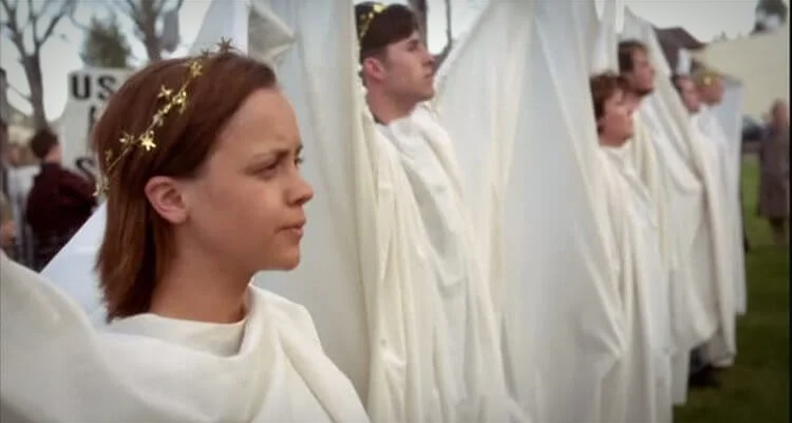
The first project where I put my hand up and said, I would really like to produce this was The Laramie Project. It came into the company, and it was a competitive situation as Moisés Kaufman and HBO were looking for a bunch of different producers. I really fell in love with it, and I went to Ted Hope and James Shamus and said, ‘I’d really like to do this’.
I had never produced anything before, and I partnered with Ross Katz. He knew more about physical production that I did at the time. So, I was like, ‘We’ll work together on the development and then we’ll work together on the production’. And that was really the first one.
Tell me about the relationship between bringing the story element of producing, and the logistics part of producing, and how those work in tandem for you.
Once you identify a story that you love and want to make, part of the ethos of what we all practiced at Good Machine was ‘development as pre-production’. Whatever raw material you’re starting with, be it a play with 36 characters in four time-zones, or somebody’s real life story, or a novel, or even an original screenplay, the idea is just to review what’s in the script.
The script is such a specific document. Every single line and every single word is going to make a bunch of people run around to do something, right? If the script says there’s a red doorknob, somebody is going to figure out how to do a red doorknob.
It’s an interrogation of intent to make sure everything fits. And then the reality of cost– what kind of story yields what kind of budget and are we going to be able to get the resources to execute this film the way that we need.
Then being very mindful of casting. Does every character in the movie need to be in the movie? Do they all have something great to do? Does everybody have an arc, primary characters obviously, secondary characters, less so, but even still, you don’t want to spend money on a role you don’t need in a movie. Combine two mediocre parts to make one good one. Really thinking about, ‘What is going to be exciting to the actors about this?’
If there’s not a director involved, then you must do the same thing — think about why would a filmmaker come and make this? Why would somebody come and direct this movie?
Speaking of a project without directors, when you’re meeting with a new writer or director, what’s the thing that makes you want to attach yourself to a project?
I really look for the sense that they will do it whether I help them or not. That sort of drive, that sort of determination. I can’t make somebody’s movie happen for them, but I love to be part of it finding the path forward.
And if they’ve got part of a team assembled already, making sure that team is all moving in the same direction. I think that’s essential.
I love that.
I want to talk about a little bit about your experience with the Spirit Awards. You won for Diary of a Teenage Girl, which I loved. NightBitch was great as well and a big Spirit Award nominee last year. Talk about your relationship with Mariel Heller and how that’s grown over the years.
I initially met Mari because of a project that didn’t happen. The subject of the story decided that they didn’t want to give us their life rights at the last minute, but I really loved Mari. So I asked, ‘what else are you doing?’
She had the rights to Diary of a Teenage Girl, and she was putting it on as a play. I was really taken with her point of view on it. And just how bold it was to be able to put it on a play and direct and act in it.
And then it ended up being accepted by the Sundance Labs. That was a huge win for us. Mari came out of that lab with a great script and great sense of how to direct the film.
And then we dealt with all the problem solving of how to deal with the animation and how to put that cast together. She had some great relationships already and the women from Cold Iron became a very big part of it. And the producers from Caviar became part of it.
It was a lot of all-hands-on-deck to support her, but again, to my point about directors, Mari won that award. We just participated with her.
My relationship with her continues to be a good one. Whether it’s coming together on something that I share with her that she responds to like Can You Ever Forgive Me? – a mutual love for those characters and loving that as a New York movie, and then subsequently joining her and the team at Annapurna, with Amy Adams and her team on Nightbitchplus bringing in our friends at Searchlight to get it made.
I’m always thrilled to be part of putting a thoughtful group of collaborators together. Like all directors who are most exciting to me, Mari’s movies are so different from one another. She’s always pushing into new territory. She’s never safe. And I really admire that.
What makes the Spirit Awards unique in the awards season landscape?
If you want to see the happiest man ever at the Spirit Awards, there is a brief clip of Mari’s dad, when her name was called, and I don’t think there’s ever been a happier person at the Spirit Awards.
But I think for many filmmakers, it’s that first initial recognition, right? And the fact that it falls in the calendar where it does in the awards season mix and that cool party by the beach. Coming from New York in February – scrappy, dark, gray winter and indie world, it always feels fun and sexy to be at that party.
As a young filmmaker you feel recognized by the industry at a very special time in the industry’s calendar year. For many emerging producers and filmmakers of all sorts, it’s a recognition of being part of something.
Still, you can be an independent filmmaker all your life. I think sometimes there’s a misconception that you start off being an independent filmmaker, so you can grow up to be a studio filmmaker. Sometimes you just want to make films that are just a little outside the system. It’s great to see that type of filmmaking gets celebrated.
When did you become first aware of Film Independent? What made you want to be a Member?
I think I was just a member of the Independent Feature Project. And then Film Independent became its own thing. I think I have been part of it since before the split. And then once it’s split, like, why wouldn’t I be part of both?
What’s been your favorite part of being a Member?
Obviously, the ability to see all the movies and to know what’s coming and to feel like you’re participating and you can have a voice. I think that’s the real plus of it.
And I’ve worked frequently with the International Programs, which are fantastic. At various times, I’ve also done judging and mentoring as well.
But most of all, it’s just a sense that there’s a community and we can access one another.
That leads me to my next question, which is about mentoring. Why that’s important for you?
I think there are people making movies today that I can learn things from, in terms of audience and genre and approach.
So many of the conversations today are about how do you find your audience? And how do you reach your audience? One of the things I love about being a producer is that every day is a different day, that each project has its own universe.
I love the different points of views, different voices, learning how somebody figured out something in a way that I hadn’t before. Hopefully I’m giving back to people. I was so lucky to have incredibly generous mentors along the way, and so I try to return that.
Great. I love that. Is there anything that you want people to know about?
I spent many years at a company called Archer Gray. I think I really helped build and define it. And I spent last year working with Priyanka Chopra’s company under a first look deal at Amazon which was very exciting. And now at the top of 2026 I find myself independent on my own. And I’m enjoying it. It’s a bit of a new thing.
That is exciting. And I hope all the best for you.
Remember to tune in to the 41st Film Independent Spirit Awards on Sunday, February 15, 2025, which will be helmed by Saturday Night Live alum Ego Nwodim. The show, taking place in Hollywood, and will be streamed live on the IMDb and Film Independent YouTube channels, and across our social platforms.
Want to vote for the winners of the 2026 Spirit Awards? Easy: just Become a Member today and you’ll be able to watch screeners of the nominees and vote for the winners, plus you’ll get year-round access to a plethora of virtual and in-person screenings, special events, education, workshops and more.
Film Independent promotes unique independent voices by helping filmmakers create and advance new work. To support us with a donation, click here.
More Film Independent…