
Robogee
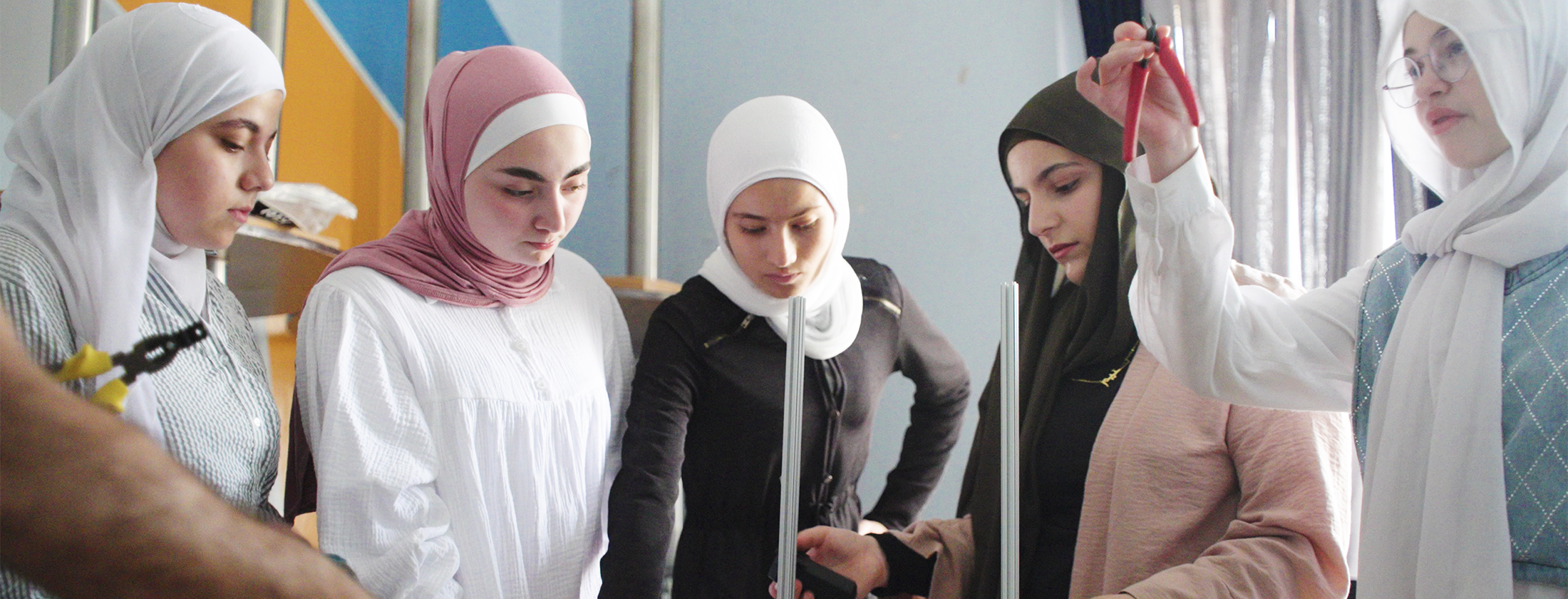
From refugeehood to return, the power of robotics
Project type: Nonfiction Feature
Project status: Production
Co-Director/Producer: Dr. Natalie Garland
Co-Director/DP: David Gösta Dawson
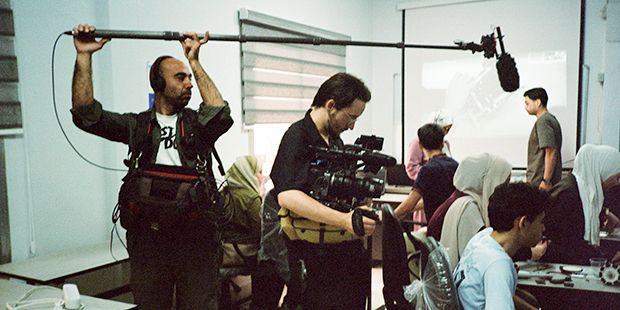
Sound Recordist: Bassam Lebbos, Ibrahim Al-Sabbagh
Executive Producers: Sawsan Asfari, Christiane Altenburg
Email: [email protected]
Help independent filmmakers tell their stories.
Make a donation to Robogee today.
Film Independent’s Fiscal Sponsorship program opens the door to nonprofit funding for independent filmmakers and media artists. Donate today and help bring Robogee to life.
Logline
Displaced to Lebanon, a group of Syrian teenagers found hope in robotics. As the Assad regime falls and return becomes possible, they face uncertain crossroads: between their lives built in exile and a homeland in ruins. How will they forge their futures?
Synopsis
Based in a community center along the Syrian border in Lebanon’s Bekaa Valley, young engineers prepare for the world’s largest Olympic-style robotics competition in Panama City. They will not be representing a nation, but instead, refugees. Two-time world champions, they are now under pressure to defend their title. As they train through the summer, Team Hope works under constrained conditions shaped by legal restrictions and war.
In Panama, their journey expands onto the international stage, as Aya, Leen, Jad, and Mohammad encounter the other 190 teams representing their countries. Culture shock, excitement, and competition collide as alliances are formed and strategies tested. A pivotal shift occurs when Team Hope forms an unexpected friendship with Team Syria. Their interactions reveal a generation navigating new freedoms – and new tensions.
Following the competition, the story fractures into divergent paths. Some team members remain in Lebanon, while others return to a Syria marked by devastation and uncertainty. Return does not resolve displacement, it complicates it. Those who go back confront a homeland they barely know; those who stay in Lebanon remain in a country where they are not welcome. In transitional Syria, Mohammad gets accepted into the robotics club at Damascus University, where young engineers are activated to build a better future. Meanwhile, the first ever national robotics competition is developing. Amid life’s uncertainty, robotics offers solutions. But more than rebuilding the physical infrastructure, robotics repairs the social fabric too.
Meet the Filmmakers
Dr. Natalie Garland — Co-Director/Producer
Natalie Garland (PhD) is a Director and Visual Anthropologist. She earned her doctorate at University College London in 2025, where she is currently a visiting lecturer. Her work brings together ethnography, film, and craft-based methodologies with a focus on Lebanon and Syria. From her research emerges the Dignity Lens, a cinematic and theoretical framework for representing refugee lives with care and nuance. Her first documentary, The Lens of Dignity (17 mins), explored agentic subjectivities of young Syrian refugees, serving as an early experiment in developing a visual language. The film was screened across UK universities with the intention of changing harmful perspectives of refugees.
David Gösta Dawson — Co-Director/DP
David Gösta Dawson is a director, DP and editor documenting artists and communities through an intimate, collaborative lens. He has worked on various short films on underground subcultures such as the Grime music scene in London, and directed Kolektiv (2021) which explored artist collectives across Belgrade, Serbia. The film premiered at Beldocs (Belgrade), Le Bal (Paris), and Berzakh (Beirut). He later developed an expertise in community-based research, studying Urban Policy at the Bartlett school of Planning. David continues to document local artists and communities across the UK and Lebanon, refining his artistic and collaborative approach.
Make a donation to Robogee.
Contact
For inquiries, please contact [email protected].