
Backstage for a ‘Dream’ Night in Hollywood at the 2026 Film Independent Spirit Awards
Sun shining on Sunset Boulevard, the indie stars came out to the Hollywood Palladium – for the first time in 32 years when the Spirit Awards were last hosted here in 1994.
Lavazza kept everyone caffeinated, with coffee stations as well as bartenders mixing coffeetails and passing out espresso potato chips. Fiji kept everyone hydrated with lipstick-friendly water bottles – straws conveniently installed through a hole in the lid. And visual branding partner Pentagram made everyone look good with the revolving pink and purple motif on stage (coordinating nicely with Film Independent’s Acting President, Brenda Robinson).
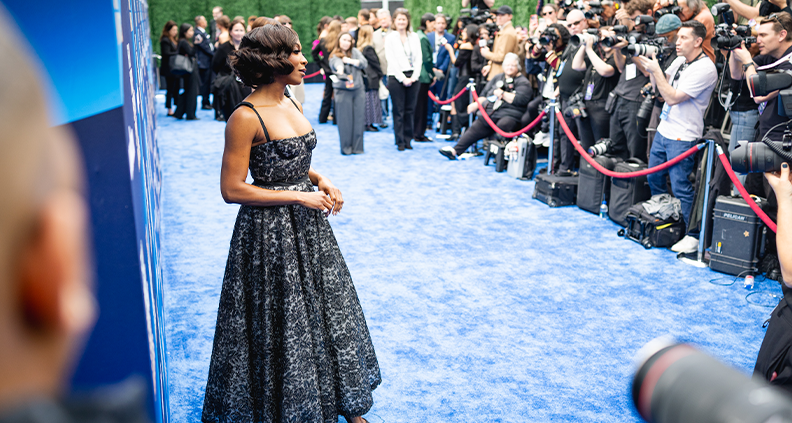
Ego Nwodim facilitated the party as our host this year, encouraging attendees to embrace the indie filmmaking spirit and be ready to act casual in the event that we drew the attention of the authorities. “In the spirit of independent filmmaking, we don’t have a permit… If I shout, ‘Cameras down!’ y’all know what to do – scatter and act like you’re waiting for the bus!” Nwodim also introduced – and awarded – a new category: The Best Movie None of Y’all Made… won by Nwodim’s favorite movie of all time, The Town.
Maybe you saw the promenade of filmmakers receiving awards on stage. But we’re letting you backstage to see what happened after they left.
SORRY, BABY
As soon as Amy Madigan (Spirit Award nominee for Best Supporting Female in Loved) declared Eva Victor’s win for Sorry, Baby, Victor expressed intense gratitude for independent cinema and love for everyone in the room. “Making this film independently is the only way I could have ever made it the way I needed to.”
Backstage: Full of adrenaline from the win, Victor received press questions with enthusiasm, particularly the one about the sandwich scene going viral. “I owe a lot of the magic of that scene to John Carroll Lynch,” who plays the gentle sandwich shop owner named Pete. Victor reflected on how amazing it was to give Agnes “sort of dad for a day.” Maybe the honesty in that conversation was possible because the two actors had no relationship in real life?
The scene is one of the few Victor shot that features a man, and being outside together with this difficult conversation lent an air of openness and freedom. An important beautiful moment in a story about recovering from trauma.
THE PERFECT NEIGHBOR
Fellow Spirit nominee Rose Byrne (If I Had Legs I’d Kick You) announced this award to the team of The Perfect Neighbor, which follows the aftermath of a minor disagreement between neighbors in Florida that took a lethal turn. Surrounded by teammates, director Geeta Gandbhir spoke her gratitude. “To be recognized by this community – people who understand how collaborative, vulnerable, and demanding this work truly is – means everything.”
Backstage: As Neighbor depends on footage from police body cameras to help tell the story of Ajike Owens and her community, the team responded to questions about the process and vision behind distilling 30 hours of surveillance into a story. The team felt this point of view was tantamount, allowing the audience to see for themselves what happened as it unfolded in real time. “You cannot ignore what you see with your own eyes,” asserted producer Alisa Payne, “It’s undeniable.”
BECAUSE A KISS CAM IS BASIC
Since the awards took place the day after Valentine’s Day, our host decided to spring a Sexual Tension Cam on the attendees. “I need you to show us that angst, that conflict, that energy that says we can – but we shouldn’t!” Nwodin turned the camera on unsuspecting couples and directed them through the beats.
Backstage: We watched and laughed along, glad to be safely distanced from the sexual tension.
THE SECRET AGENT
Brazilian writer/director Kleber Mendonça Filho began his acceptance with, “It’s Carnaval time in Brazil right now.” This is Filho’s third nomination and first win; he commended it to young filmmakers everywhere who have a chance to make films about their neighborhoods.
Backstage: Commenting on the effects of authoritarian government on Brazilian cinema, Filho was frank but hopeful, declaring that it’s back after a blackout period when the government shut down the minister of culture, then went after artists. “The usual authoritarian, fascist playbook. Now we’re back, public funding is back.” Filho is convinced this is a strong time to make films and tell stories.
LURKER
Alex Russell’s first screenplay and first feature won both those awards. “It can amaze you how much no one cares at the beginning, and then it’s so much more meaningful when someone does.” Why did no one hand him 3-5 million dollars at the beginning of his film career? Still unclear, but thankfully Lurker progressed anyway.
Backstage: Russell’s friends in the room wanted to know his plans after this. “After this moment? I’m drinking champagne. With you. We’re going to the W – you’re all invited!”
Russell also spoke about his experience in a writer’s room (The Bear and Dave) and how that prepared him for his first feature. “What seems important or funny in the room turns out to be different from what really mattered for the show.” It taught him to be flexible about what the script is trying to be rather than getting precious about the writing.
CHIEF OF WAR
Speaking for Chief of War’s Best Ensemble Cast in a New Scripted Series was Cliff Curtis, who plays Keoua in the show. “Quite often Pacific Islanders are asked to play background in other people’s stories – even stories that take place in our own homelands…[For Chief of War] we were asked to represent proud royal bloodlines with the complexities of their own personal histories.” Moses Moku finished by addressing the room in Hawaiian native language, Olelu Hawaii, followed by a moving and visceral series of movements from Keala Kahuanui-Paleka.
Backstage: The ensemble brought a swell of energy with them as they squeezed together for a photo and reflected their experiences working together. From staring into the eyes of Jason Momoa to filming on active lava fields in episode 9, the cast took turns calling out memories.
But Cliff Curtis spoke about how it feels to have so many indigenous Hawaiian faces on a popular show. He asked the room, “How many of you have been to Hawaii? What did you do there?” Playing golf, hanging out at a resort, most people have no idea about Hawaiian royalty and the culture of people living there. “Most of the planet do not understand the story of Hawaii.” But the story is still alive and the people still exist. This cast is celebrating their culture in the spotlight.
ADOLESCENCE
Accepting the award for Best New Scripted Series was Jeremy Kleiner – 10-time Spirit nominee and 2-time winner. Kleiner spoke frankly about the need for money and how ideological the pursuit of it can be. “That ideology isn’t total, it doesn’t know everything. There’s a place for what we believe in, even if it doesn’t necessarily conform to what is considered conventionally correct. You have to keep pushing for that space.”
Backstage: Erin Doherty, who won Best Supporting Performance for her work in Adolescence, commented on the enriching experience of having conversations with strangers who resonate with the show, “the thing you could never dream of. This show is bringing everyone together.”
Kleiner continued the thought on how different shows provide different types of comfort. “There are things that hit people in a place that may not be necessarily comforting on the surface, but that provides a different kind of comfort – because it’s dealing with things in their lives.” The Adolescence team felt emboldened to keep going for the stories worth telling.
ESTA ISLA
In honor of John Cassavettes – who raised $40,000 on a late night radio show, making him the father of crowdfunding as well as the father of independent film – the category of films made for under $1 million. The creators of Esta Isla cheered their home of Puerto Rico as inspiration.
Backstage: Cristian Carretero and Lorraine Jones Molina are very proud of Bad Bunny. They acknowledged that Puerto Rico has always been a powerhouse for music, but they are pleased to be part of the new wave of Caribbean filmmaking that’s trying to do the same thing.
“This is definitely a love letter to Puerto Rico,” said Molina, “because we weren’t seeing our stories being told in a way that felt very honest to us.” In an effort to reconnect with the land, culture, history, ancestors, and show what it’s like to actually live there has been powerful. “We’re not just winning it for us, we’re winning it for all of us. All of our stories. And honestly every story that isn’t being told, people who are unheard.”
Carratero added that the expense of filmmaking has made it a high art, but the spirit of the Cassavettes award makes that art more attainable. “You don’t have to wait for permission or a perfect moment. I think you have to go out there and film. Things will fall into place eventually.”
THE PLAGUE
Kayo Martin won Best Breakthrough Performance as Jake in The Plague, and called his time filming in Romania “one of the best times of my life. For a while all I knew was skateboarding and boxing and competition. Acting has opened up a completely new area of my brain.”
Backstage: So how did the filmmakers find you? Martin unabashedly proclaimed, “My account was banned on social media, so they emailed my sister.” That’s how Martin learned they wanted him to try out for the part. “I got a callback and I met them in downtown New York and got some pizza with the director. The rest is history. Let’s go!”
THE LONG WALK
The Robert Altman Award went to Francis Lawrence, director of a film about teenage boys in a walking competition with deadly stakes – based on Stephen King’s 1979 novel. As a short feature played clips and interviews, we learned the camera rigs were custom-made to accommodate long walking scenes. How long were those walking scenes?
Backstage: The cast and crew walked 8-15 miles a day. “We were outside in the heat,” Lawrence reminisced, “getting bitten by ticks, walking 15 miles a day. These guys are fantastic, they carried the weight of the movie. I’m glad they’re being recognized.” One cast member tracked 261 miles walked in the course of the film.
Of course we had to break that down: “Some scenes are 8 pages long. If you average a minute per page, you’re talking 8-minute takes. You’re walking a quarter mile. You walk the take, you walk back, you walk the take. It’s amazing the physical toll it took on these guys and the crew as well.”
Lawrence was moved to be honored with a Spirit Award, and praised his cast and casting director Rich Delia, who brought them all together. “If I’m being dead honest, the movies I do don’t usually win awards. They’ve done fine for me, but I choked up when I found out. To be recognized by the Film Independent group was amazing – the filmmakers that are recognized are really fantastically talented. It’s touching.”
IF I HAD LEGS I’D KICK YOU
Rose Byrne shared the award for Best Lead Performance with writer/director Mary Bronstein, who fought for eight years to make her deeply personal story. Byrne claimed her character could only exist in an Independent film – “She’s firm and she’s ferocious and she’s a middle aged woman!”
Backstage: Is Byrne planning more dramatic roles? Kind of the opposite – “I’m about to do a Noël Coward play!” But found it so refreshing to be amongst fellow indie filmmakers full of hope instead of cynicism. After difficult days of filming, Byrne credits her two small children to help her leave the film world behind and be in the moment, responding to their curiosity and ability to move on.
TRAIN DREAMS
In addition to Best Feature, the sweeping story about “the small lives that keep the world going,” in director Clint Bentley’s words, also took awards for Best Director and Best Cinematography. Bentley was gobsmacked and cinematographer Adolpho Veloso avoided preparing a speech so he wouldn’t jinx it (which apparently worked).
Backstage: The second Brazilian to accept an award today, Adolpho Veloso was overjoyed that Netflix added Train Dreams to its roster so that his family in Brazil could see one of his films for the first time. Veloso also spoke to the benefits of long-term collaboration with Clint Bentley. Drawing from other films as references, they were also able to draw from their own – “everything we didn’t like, the problems made a very long list. But also things we liked.” And in that way, the team has honed their visual style together.
Bentley credited Veloso’s work with turning a relatively unfilmable novella into the film that Train Dreams is. The book’s poetic, stream of consciousness narrative lent itself as much to the cinematic visual as to a script. We also learned that the precise style of locomotive we see in the film is built by the crew from plywood. “Amazing craftspeople doing brilliant work.”
THE DREAM CONTINUES
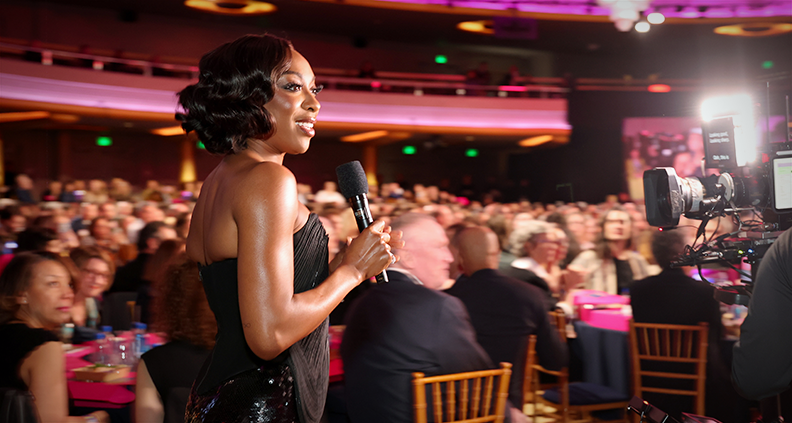
Throughout the day, echoes of love for this important, difficult, expensive, hugely collaborative medium have reverberated through the room. Through every up and down in the market and the receptivity of cultures and audiences, independent film continues to make way for unpopular opinions, unsung heroes and unconventional stories.
Which is exactly what keeps us coming back year after year. Congratulations to this year’s nominees, winners and patrons.
We do it for the love.
Film Independent promotes unique independent voices, providing a wide variety of resources to help filmmakers create and advance new work. Learn more online and become a Member of Film Independent today