

Five Films to Pair With Jane Schoenbrun’s “Secretary” Live Read
Power, sex and violence are three themes that go back to ancient times, but they are also the obsessions for of-the-moment storytellers like Homer. Together though, they can examine the extremes of the human condition, and force us to look at who we are, what we want, and what we’re willing to do for it.
This week, Film Independent is hosting Jane Schoenbrun, along with Teenage Sex and Death at Camp Miasma stars Gillian Anderson and Hannah Einbinder, for a sold out Live Read of the 2002 classic Secretary. Both films are two-handers dealing with sexual dynamism and the kink of violence. But Secretary isn’t the only other film to wade into those waters.
We’re sharing five other classics that are having similar conversations, and are great watches before this week’s Live Read and Camp Miasma’s release on August 7th.
Jennifer’s Body (2009)
Diablo Cody and Karyn Kusama teamed up for this now cult classic where a possessed Megan Fox turns the tables on the boys of her small town, and leaves a trail of blood in her wake. Her best friend, played byAmanda Seyfried, still desperate for her approval, learns she has to pull herself away from the evil force that is Jennifer.
The Duke of Burgundy (2014)
An art-house slow burn from writer/director Peter Strickland (Berberian Sound Studio) where a woman who studies butterflies and her protégé/maid embark on a BDSM relationship. The power quickly shifts as the young Evelyn’s expectations for being dominated grow and she begins to play her own power games.
Sunset Boulevard (1950)
The immortal Billy Wilder film whose influence can be felt across so many other classic films, Sunset Boulevard set the standard for age-gap relationships that turn into fever dreams. Gloria Swanson plays Norma Desmond, who pulls writer Joe Gillis (William Holden) into her orbit. The work and the personal mix, jealousy becomes violent, and the delusion it takes to create art is taken to the extreme in a film that’s always due for a rewatch.
Wes Craven’s New Nightmare (1994)
Teenage Sex and Death at Camp Miasma acts as a meta commentary on the ability to remake a horror film ad infinitum. Another director who explored this idea was one who felt it acutely, Nightmare on Elm Streetand Scream director Wes Craven. Sick of the demands to make more Nightmare movies, he made a left turn with the underrated New Nightmare, and had Elm Street star Heather Langenkamp play herself being dragged into another sequel, and finding the production and her life being cursed by a “real” Freddy Kruger, as the retelling of the Freddy myth increases his power.
Peeping Tom (1960)
Some call Michael Powell’s Peeping Tom the original slasher film. It was undoubtably ahead of its time as it was panned by critics for dealing with unseemly themes. In it, a shy young filmmaker pathologically mixes arousal with violence, as he films himself murdering young women in first-person POV. The film acts as a dark mirror for the audience, who thanks to the filmmaking and the inherently voyeuristic nature of cinema, can’t help but be thrilled themselves.
Film Independent promotes unique independent voices by helping filmmakers create and advance new work. To become a Member of Film Independent, just click here. To support us with a donation, click here.
Keep up with Film Independent…
When the House Is on Fire, Give Teenagers a Camera
It seems apt that a room full of teenagers introduced their documentaries about ableism, gentrification, and racism gathered in a space built to memorialize a time where this country’s civil liberties failed a community wholesale. Our documentary filmmaking high school program held a special screening of films exploring civil liberties at the Japanese American National Museum’s Democracy Center — a room that exists, as one speaker put it, because the institution itself “serves as a reminder of how this country and democracy failed its people.”
The screening was the summation of a semester of work. Seventy-five students from Van Nuys High School, Westbrook Academy, and Renaissance School for the Arts in Long Beach teamed up to make short documentaries with a focus on their own communities’ oral history.
That connection was underlined at the beginning of the semester long program when every participating class watched Film Independent’s Fellow Ann Kaneko’s Manzanar Diverted: When Water Becomes Dust and sat down with the director to talk about Japanese American internment camps during World War II, as a way of providing them with a framework for their own explorations through film.
The students were ushered along by their teachers and hand selected mentors, all Film Independent Fellows, who visited each classroom throughout the spring semester, walking students through a curriculum built around documentary and oral history. The program offered them training on documentary filmmaking techniques while providing them with first-hand experience in the power of cinema to explore issues of vital social importance and express their own point of view to the larger community. The museum setting at the end was the perfect stage to highlight how history is not settled, and that the students in the room are its next chapter.
That was made evident through the films and In the conversation following the screening of their work, when he young filmmakers offered us a very fresh and hopeful outlook through their own voices: They left us with a feeling that this generation, raised on social media, COVID classrooms, and a questionable economic future, know all too well how to handle the world that has been handed to them. These high schoolers have grown up fast, but the films they made showed how they plan to step up to the plate and engage in our complicated world.
The post-screening discussion also showed just how much the program both pushed the students as well as broughtout their inner artists. Editing arguments turned into two-day debates about how to represent “systematic oppression.” A student researching Scientology for a film ostensibly about civil liberties stumbled, almost by accident, into a meditation on authenticity and social masking. A documentary about the 1984 and upcoming Olympics turned into a fight over a single word, “cleanup,” after an interview subject argued the term was really about making unhoused residents “disappear” for the cameras.
Zion Smith Vargas, describing a documentary made after attending a No Kings protest, told the room that speaking up matters. ” The more you open your mouth, the more you speak up and use your voice, you’re going to be alright”. Paulina Cummings, reflecting on why she made a film about music and community, said she believes “through art, you can not only express yourself, but also advocate for civil liberties for yourself and for your environment.” These lines weren’t fed to the students. They came to these conclusions by interacting with their subject matter, their collaborators, and through the art itself.
When given a camera, an opportunity, as well some guidance these students found their voice, and it turned out they had plenty to say. We’re sharing five of the films here:
A City on Display
Raquel Grande, Andrea Baptist, Diora Smith-Vargas, Alexandra Umana, Mellanie Solis, and Reece Nicholson
Westbrook Academy, 12th Grade
The System: Ableism
Eden Hardwick and Liam Klipstine
Van Nuys High School, 9th Grade
The Art of Becoming
Daniel Arteaga-Rodriguez, Joaquin Lopez, Iris Esquivias, and Addie Transue
Renaissance High School for the Arts, 11th Grade
The Right Word
Harlye J. Einbinder, Epique Jackson, Esther Ortiz, Layla Green, Jayleen Santilon-Solrzano, Angel Bernal-Ramirez, Ella Gemme, and Daisy Gonzales-Ordoze
Van Nuys High School, 9th Grade
The Air We Breathe
Oliver Bryant, Jhet Aquino-Medrano, and Ingrid Garcia
Renaissance High School for the Arts, 11th Grade
This profound documentary exploration program was supported by Snap Foundation and Sony Pictures Entertainment.
To see more exceptional films created by high schoolers, check out our upcoming Future Filmmakers Showcase on 7/24. Reserve your tickets here:
Film Independent promotes unique independent voices by helping filmmakers create and advance new work. To become a Member of Film Independent, just click here. To support us with a donation, click here.
Keep up with Film Independent…
Don’t Miss Indies: What to Watch in July
The summer is heating up, and this month’s invitation to cool off at the movie theater comes with a complete menu of indie films – truly something for anyone (though maybe not for everyone). Dance with the hobbyhorses, match wits with 16-century samurai, or have your world rocked by a sexually adventurous boss lady, but don’t stay home and complain there’s nothing to watch.
NIGHT NURSE
When You Can Watch: June 30
Where You Can Watch: Film Independent Presents
Writer/Director: Georgia Bernstein
Cast: Cemre Paksoy, Bruce McKenzie, Eleonore Hendricks
Why We’re Excited: A dark psychological thriller set in a luxury retirement community, where a young nurse named Eleni (Cemre Paksoy, The Affair) is hired for in-home care. Her enigmatic patient, Douglas (Bruce McKenzie, House) is a life-long con artist, running a racket on his elderly neighbors. Eleni is drawn into the scheme, taken with Douglas and his magnetic confidence. As another nurse (Eleonore Hendricks, Uncut Gems) joins the game of deluding senior citizens into believing she’s their granddaughter in distress, they form a cultish throuple around Douglas’s mysteriously failing health and suburban crime spree. “I wanted the film to explore that emotional space where being needed can feel like purpose,” filmmaker Georgia Bernstein told The Film Stage, “and how that devotion can gradually become destructive.”


YOUNG WASHINGTON
When You Can Watch: July 3
Where You Can Watch: Theaters
Director: Jon Erwin
Stars: Mary-Louise Parker, William Franklyn-Miller, Ben Kingsley
Why We’re Excited: The latest blockbuster biopic takes on an intimidating figure in world history: George Washington, but not as the future president of the as-yet-unformed United States. Starring British actor William Franklyn-Miller (Dongji Rescue), we meet George as a preteen mourning the death of his father, then follow his coming of age as a wannabe Brit. Shunned by the society to which he aspires, the ambitious young colonist resolutely seeks out opportunities to distinguish himself, courting the hand of a lady (hint: not Martha) and volunteering for a dodgy mission with the Virginia militia led by Robert Dinwiddie (Spirit Award nominee Ben Kingsley, House of Sand and Fog). In contrast to the laudatory writings of Washington in his time, filmmaker Jon Erwin (I Can Only Imagine) attempts to showcase the making of a resilient leader by depicting a Washington who wavers, who lies, and who even fails – but tries again.

THEY FIGHT
When You Can Watch: July 7
Where You Can Watch: Film Independent Presents
Director: Sheldon Candis
Stars: Wendell Pierce, André Holland, Samira Wiley
Why We’re Excited: The setting for this boxing drama is Southeast Washington, DC, where Slim (Spirit Award nominee Wendell Pierce, Burning Cane) runs a youth recreation center. Fresh out of prison and eager to prove himself to the mother of his child, Walt (André Holland, Moonlight) returns to his old mentor and is given a chance to coach boxing, a sport he used to love. There he encounters neighborhood teens fighting their own trials in life: one parent’s terminal illness and another’s absenteeism. Through the medium of boxing, the underdog bunch rises to their collective challenges while Walt seeks a job and a place to live, struggling to maintain his 3-year sobriety when back pain tests his resolve. Based on a true story and a 2018 documentary with the same name.

READING LOLITA IN TEHRAN
When You Can Watch: July 10
Where You Can Watch:
Director: Eran Riklis
Stars: Golshifteh Farahani, Zar Amir Ebrahimi, Mina Kavani
Why We’re Excited: Israeli filmmaker Eran Riklis (Lemon Tree) brings to the screen 24 years of work, academic debate and resistance from Azar Nafisi’s 2003 memoir. The Iranian-American began teaching in Tehran after the 1979 revolution promised a whole new world for Iranians in the diaspora who came back home. Azar (played by Golshifteh Farahani, Paterson) teaches literature in a prestigious university, encouraging spirited discussion among her students. As strong religious views begin to take effect, the class is first segregated to women-only, then mandated to embrace conservative clothing, until Azar’s curriculum itself is protested in the street. Navigating these changes in her private life as well as her classroom, Azar fights for the freedom to embrace the uncomfortable conversations that come after reading books like Lolita.
FORBIDDEN FRUITS
When You Can Watch: July 15
Where You Can Watch: Film Independent Presents
Director: Meredith Alloway
Stars: Lili Reinhart, Jordan Duarte, Victoria Pedretti
Why We’re Excited: The girls working at this mall fashion store are more than just a clique – they’re a coven. Of witches? Perhaps. This witty dark comedy pairs a unique twist on feminist ideals with frolicsome mall set pieces: inducting a new member from the pretzel stand, sleeping with guys from the food court, and using the dressing room as a confessional (unburdening themselves to the spirit of Marilyn Monroe, of course). But more than a pop teenage girl world, this cult of femininity meets its match when they put a hex on someone – and it works. Shaken by the potential of what they’ve done, the group turns a questioning eye on its leader, Apple (Lili Reinhart, Riverdale). Is she the real toxic influence, or are they all under a spell? Executive produced by Film Independent member Randy Manis.

HORSEGIRLS
When You Can Watch: July 17
Where You Can Watch: Theaters
Director: Lauren Meyering
Stars: Gretchen Mol, Lillian Carrier, Jerod Haynes
Why We’re Excited: Maybe some of us just learned today that hobbyhorsing is a gymnastic sport. Like, the toy horse on a stick. For Margarita (Lillian Carrier, Everything’s Gonna Be Okay) it’s the thing she loves to do, showcasing traditional equestrian moves without the benefit of a live horse. Margarita is 22 and autistic, pushed into an escalated path to self-sufficiency in the wake of a cancer diagnosis for her mom, Sandy (Gretchen Mol, Boardwalk Empire). Margarita lands a job at the Halloween store, but would rather break into her neighbor’s house to get her hands on the coveted hobbyhorse. That’s how she meets her coach (Jerod Haynes, The Greatest) and joins his competitive hobbyhorse dance team. Film Independent member Alix Madigan is a Producer.
HADESTOWN: THE MUSICAL
When You Can Watch: July 24
Where You Can Watch: Theaters
Director: Brett Sullivan
Stars: Reeve Carney, Eva Noblezada, Patrick Page
Why We’re Excited: Anaïs Mitchell’s concept album turned Grammy- and Tony-winning stage production is captured on screen and showing in theaters, exploring the Greek myths of Orpheus and Eurydice in a New Orleans jazz club. Under the direction of veteran Brett Sullivan, who has notably captured prominent musicals like Newsies and Billy Elliot for the screen, audiences get a front row seat to the doomed love stories that intertwine through music, schemes and smoke. Orpheus (Reeve Carney, House of Gucci) is young and poor, writing songs to incite the return of spring. When he falls hard for Eurydice (Eva Noblezada, Yellow Rose), she seems to return his affection. But the world is cold, and when the offer of protection and warmth comes from Hades (Patrick Page, In the Heights), Eurydice follows him underground – prompting Orpheus to go after her. Executive Produced by Film Independent member Tyler DiNapoli.
I WANT YOUR SEX
When You Can Watch: July 31
Where You Can Watch: Theaters
Director: Gregg Araki
Stars: Olivia Wilde, Cooper Hoffman, Daveed Diggs
Why We’re Excited: Spirit Award winner Gregg Araki (Mysterious Skin) offers a love letter to Gen Z in the form of this dark comedy sexploration of power on multiple levels. “Gen Z doesn’t have sex anymore,” Araki reflected in an i-D interview. “In the times we live in, people are kind of afraid to make mistakes.” The adventures commence when Elliot (Cooper Hoffman from the Spirit Award-winning The Long Walk) lands a coveted job working for Erika Tracy (Spirit Award winner Olivia Wilde, Don’t Worry Darling). Working for the provocative, demanding artist and iconic cultural figure is less than thrilling, but when she singles him out for a wild physical experience without strings, it seems like a dream come true – at first. But the consequences of Elliot’s youthful fantasy rapidly kick him into a grownup nightmare that forces him to make some decisions.

THE SAMURAI AND THE PRISONER
When You Can Watch: July 31
Where You Can Watch: Theaters
Director: Kiyoshi Kurosawa
Stars: Masaki Suda, Masahiro Motoki, Munetaka Aoki
Why We’re Excited: We love a good murder mystery, and this looks like a great one – set in a Japanese castle 500 years ago (the Warring States period). It’s a game of cat and mouse with the titular samurai – Lord Murashige Araki (Masahiro Motoki, Departures) – keeping his prisoner alive for consultations about a series of unexplained deaths in the castle while under siege by a warlord named Oda. As a war strategist, Kanbei Kuroda (Masaki Suda, Cloud) offers insight while he is kept chained in the castle dungeon. Based on Honobu Yonezawa’s 2021 novel, the two match wits to uncover the truth while attempting to pursue their own distinct ambitions, and Lord Araki’s departure from samurai culture (keeping Kuroda alive rather than immediately beheading him) sets the stage for an unpredictable relationship.
PROGRAMMER’S PICK: SELEGNA SOL
When You Can Watch: July 1
Where You Can Watch: Film Independent Presents
Director: Anouk Moyaux
Why We’re Excited: From Film Independent Lead Programmer Jenn Wilson–
Selegna Sol is the debut feature of French director, Anouk Moyaux. It premiered at Cinéma du Réel in 2025 and had its US Premiere in the 2026 Los Angeles Festival of Movies. The film centers on a Mexican immigrant named Gibran who has lived and worked in the US long enough to finally be invited to become a US citizen. Even though he loves hanging out with his friends, he hates that he has to spend most of his life working to cover just basic living expenses in the US. Ultimately, he feels like returning to Tecate, Mexico, where he was born, might be a better lifestyle for him. The contemplation of work/life balance and how, for the most part, no one really has an appropriate amount of time for themselves is a concern that’s felt heavily here, but the film also does spend a lot of time with Gibran and his friends and emphasizes that it’s still possible to find joy in the shared moments we have with others and the small things in life. The film is beautifully shot in 16mm and has a terrific observational style, a loving ode to locales in Boyle Heights and Los Angeles’ East side.

KEY
Film Independent Fellow or Member
Film Independent Presents Screening, Q&A
Microbudget
Filmmaker or Lead Characters of Color
Film Independent Spirit Award Winner or Nominee
Female Filmmaker
LGBT Filmmaker or Lead LGBT Characters
First-time Filmmaker

LA Film Festival Winner or Nominee
For over 40 years, Film Independent has helped filmmakers get their projects made and seen. The nonprofit organization’s core mission is to champion creative independence in visual storytelling in all its forms, and to foster a culture of inclusion. We support a global community of artists and audiences who embody diversity, innovation, curiosity and uniqueness of vision. To support our mission with a donation, click here.
Keep up with Film Independent…
Meet the 2026 Film Independent Changemaker Award Honorees
Film Independent’s Artist Development programs are all about uplifting new generations of artists. One of the magical things we’ve found over the 30-plus years of fostering talent, is that so many of those artists want to pay it forward. In 2023 we launched the Changemaker Award to give recognition to alumni of our Artist Development programs whose body of work across film and television has enriched our culture and whose generosity in mentoring the next generation of artists has left a lasting mark in our community.
We’re thrilled to announce that Alysa Nahmias, Robbie Pickering, and Harry Yoon will receive the 2026 Film Independent Changemaker Award.
The three will be honored at the 23rd Artist Development Showcase on July 21, 2026, at the Directors Guild of America Theater, an annual celebration that spotlights new short films from Film Independent Artist Development supported filmmakers.
This year’s class joins past Changemakers like Academy Award nominees Smriti Mundhra and Pamela Ribon, Spirit Award winners Andrew Ahn and Jomo Fray, Peabody winner Grace Lee, and Sundance’s Kim Yutani, among others.
“We are proud to celebrate visionary artists whose bold storytelling expands our cultural landscape and whose commitment to mentorship ensures a vibrant future,” said Angela C. Lee, Director of Artist Development, “Alysa Nahmias, Robbie Pickering and Harry Yoon exemplify artistic excellence, generosity and impact, demonstrating what it means to lead as changemakers in our industry.”
THIS YEAR’S HONOREES
Alysa Nahmias is an Emmy-winning filmmaker and founder of AJNA Films. Her directing credits include Cookie Queens, which recently premiered at Sundance and won the SXSW Festival Favorite Audience Award, the Emmy-winning Art & Krimes by Krimes for MTV Docs/Paramount+ and Unfinished Spaces, which won a 2012 Film Independent Spirit Award and is in the MoMA collection. Alysa’s producing credits include Wildcat and Unrest, among others. She is a frequent advisor for Sundance Catalyst, Film Independent labs and Global Media Makers and is a member of the Academy of Motion Picture Arts & Sciences and a Co-Founder of FWD-Doc. Alysa Nahmias participated in the 2013 Fast Track finance market and the 2020 Documentary Lab.
Robbie Pickering is an American screenwriter, director and producer. He is best known as the creator and showrunner of the Starz limited series Gaslit (2022) and for writing and directing the award-winning independent film Natural Selection (2011). He has also written on Search Party and Mr. Robot. Robbie Pickering was supported in the 2006 Screenwriting Lab, the 2007 Directing Lab and the 2007 Fast Track finance market.
Harry Yoon is a Korean American editor based in Los Angeles. Yoon received an ACE Eddie Award for his work on the pilot for Beef, the A24 and Netflix series starring Steven Yeun and Ali Wong. Yoon edited the Academy and Golden Globe Award-winning feature Minari for director Lee Isaac Chung, which earned him an ACE Eddie nomination. His feature editing credits include the biopic Michael, directed by Antoine Fuqua, The Fire Inside, directed by Rachel Morrison, Detroit, directed by Kathryn Bigelow, Marvel’s Shang-Chi and the Legend of the Ten Rings, directed by Destin Daniel Cretton, and Thunderbolts*, directed by Jake Schreier. Yoon also worked on the first season of the HBO and A24 series Euphoria, created by Sam Levinson. Harry Yoon is an alumnus of Project Involve in 2004.
SHORTS TAKE THE STAGE
Beyond honoring this year’s Changemakers, the Showcase spotlights — and celebrates — what’s next. This year’s showcase includes six new short films from Film Independent Fellows, each with a unique take from visionary storytellers:
Dolce, “Fräknarna”
Director, J.M. Harper (Amplifier Fellowship 2025, Episodic Directing Intensive 2026)
A music video for Dolce’s song Fräknarna.
God Sleeps on Sundays
Writer/Director, Naishe Nyamubaya (International Programs 2024, Fast Track 2024); Producer, Sue-Ellen Chitunya (Project Involve 2016, 2016 Grant Recipient, Producing Lab 2020, Amplifier Fellowship 2023, Fast Track 2024)
A fierce rivalry erupts between a traditional healer and a Christian preacher who is hellbent on building his church on her land.
Haint
Producer, Selena Leoni (Project Involve 2021); Cinematographer, Joewi Verhoeven (Project Involve 2024)
When gentrifiers mysteriously begin to die, a Gullah Geechee handywoman who recently lost her home, must decide whether to help them or leave the newcomers to their fate.
Living with a Visionary
Producer, Mireira Vilanova (Project Involve 2021)
After 50 years of marriage, John must care for his wife while learning to live alongside her vivid hallucinations.
Permanent Guest
Writer/Director/Producer, Sana Zahra Jafri (International Programs 2023)
A young woman’s world is rattled by the arrival of a relative who forces her to weigh family obligations against her growing discomfort.
The What
Writer/Director/Producer, Christopher Nataanii Cegielski (Project Involve 2016, 2016 Grant Recipient, Episodic Directing Intensive 2026)
A routine job for two hitmen unravels when one of them recognizes the target as someone who ghosted him months ago.
Photos Courtesy: Hilary Bronwyn Gayle/Sonny Valicenti/Jiwon Park
Film Independent promotes unique independent voices by helping filmmakers create and advance new work. To support our work with a donation, please click here. Become a Member of Film Independent here.
Keep up with Film Independent…
‘Girls Like Girls’ in Full Bloom
Young love, it’s one of the sweetest kinds of stories to witness take shape and unfold. Naive characters form a connection that’s wildly unfamiliar to them, whereas—I’d bet—many moviegoers are more familiar with that phenomenal four-letter feeling. In films that explore this subject, in all its blissfulness and challenges, there’s both a heartfelt hopefulness and an understood apprehensiveness for the young lovers on-screen. Still, some love stories are remarkably more layered than others, as is the case of those with queer perspectives. On June 16, Film Independent spotlighted one of these perspectives in an advanced screening of the romance drama Girls Like Girls by writer/director Haley Kiyoko, her whirlwind lesbian story come to life. It was followed by a Q&A with the filmmaker and leading cast, Maya da Costa and Myra Molloy, moderated by Mia Vicinio.
Set in 2006 rural Oregon, the film follows teenage Coley (da Costa) who moves in with her estranged father Curtis (Zach Braff) after her mother’s passing. She meets Sonya (Molloy), a high-spirited girl, and the two form an unexpected romance. Self-doubt and social fears seep into their magnetic connection, which they confront and try to learn from for the chance of a blossoming relationship.
Girls Like Girls marks Hayley Kiyoko’s directorial debut and Maya da Costa’s feature-film acting debut. As for Myra Molloy, although not her first film acting role, it marks her first leading role. Each artist was in a unique position to bring something new to the project, and the result was an emotionally-driven and graceful portrait of two girls not only discovering their sexuality, but also a deep attraction for each other as individuals. It’s not often that we get films centered on women or girls falling in love. Kiyoko stated, “I think that representation is so important. We get a movie like this every ten years…and we deserve to be able to name ten movies at the top of our head that are two girls falling in love, or two women—two POC women—starring as leads,” adding, “that’s really challenging to do, so I’m just so immensely proud of their performances.”
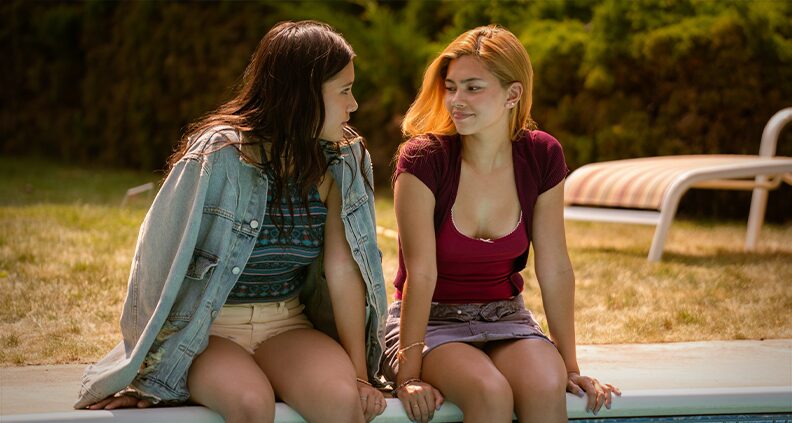
Racial identity doesn’t play a significant role in the story, however the main characters are seen and shown as mixed race, and that detail adds to the discourse about the marginalization of queer love that the film explores. Vicinio asked Kiyoko about this intersectionality, “Alienation is a major theme in this film…being queer, being Asian, being mixed race—especially in a place as white as Oregon…and I was wondering how this story has helped you and also your fans to process these feelings of isolation, and the catharsis that comes with a story like this.” Kiyoko replied, “I think if I was any age being able to buy a ticket to see a movie like this…it would’ve absolutely changed my life…my experience knowing that I was queer at such a young age was so silent. I didn’t get to share it with people. It was through a glance, it was through a look, it was me overthinking a DM or AIM message, so it was really important for me to try to capture that internal process visually.”
Girls Like Girls is not just a film, it’s an intellectual property that Haley Kiyoko has been carefully crafting since the release of her hit song and viral music video of the same name back in 2015. It was absolutely inescapable at the time, especially in LGBTQIA+ spaces, cementing her as a pop icon in the community. Then, it was materialized into a young adult novel published in 2023 becoming a New York Times bestseller. Fast forward to now, the film adaptation, but it certainly wasn’t an easy journey. “I’m so proud to have not given up…they make it so hard for us to tell stories from different perspectives from different people—and yet we’re not niche! There were so many moments of pitching this film where people were like ‘You’re queer, you’re Asian, you’re a woman; who’s gonna watch this?’ I’m like—millionsof people.” Here’s hoping exactly that, because when all is said and done, it’s a romance drama for queer people just as much as it can be for allies.
Girls Like Girls is now in theaters nationwide! A special thanks to The Golden Globe Foundation, KCRW, and Focus Features for making this event possible. A shoutout to Focus Features for providing custom-made Girls Like Girls Pride flags for our members to wave this Pride Month, and each one after.
Film Independent promotes unique independent voices by helping filmmakers create and advance new work. To support our work with a donation, please click here. Become a Member of Film Independent here.
Keep up with Film Independent…
Project Involve Fellow S. Lakmé Iyengar on Lensing Both Animation and Live Action
As the 2027 Project Involve cycle is open for applications, we are looking back at S. Lakmé Iyengar and her experience in Project Involve. Lakmé worked on the live action film Saving All My Love and the stop motion animation film Dormilón through Project Involve. Working on both films at the same time gave Lakmé a unique opportunity to reflect on the differences and similarities between live action and stop motion animation cinematography.
Saving All My Love captured Lakmé’s interest “with its exploration of the mother daughter relationship through hoarding and learning how to let go of physical objects to make place for those close to us.” The majority of the film took place in one house and Lakmé explained that because the film dealt with feeling physically overwhelmed by a lack of space, she wanted to make “the frames also feel claustrophobic and cramped.” With Dormilón, the film takes place in an old theater and draws inspiration from Vaudeville and early 20th century performers. Lakmé researched films from the early 1900s to take inspiration for the film’s cinematography. “The film takes place over one night but it’s a very eventful night so we talked a lot about color and lighting evolution over the course of the film which played a big role in setting up looks and visualizing Dormi’s journey in the story.”
Lakmé explains that “the core idea of cinematography stays the same in live action and stop motion animation; a cinematographer still has to work with camera and lighting in either medium.” Stop motion animation is much slower paced “which allows for more time to spend on framing and lighting each shot”, compared to the fast-paced nature of live action film making. Being in Project Involve, she got access to the story and script development of both films, which she says gave her “an opportunity to try new techniques and push myself to be a better collaborator.”
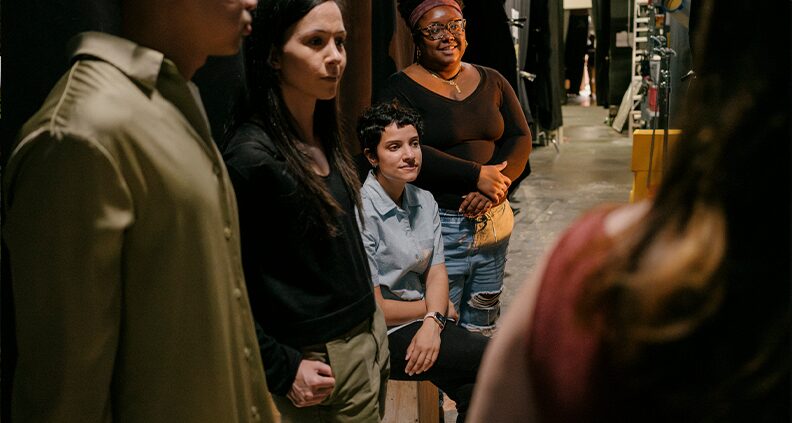
Lakmé grew up in Australia and after graduating with a degree in Communications and Production, she came to America to pursue a master’s degree in Cinematography from the American Film Institute. Since college, she was sure that cinematography was the job that best suited her and her interests. She was a Film Independent member for a few years before applying to Project Involve, and was drawn to the program because of Film Independent’s “commitment to independent storytelling and amplifying marginalized voices.”
Project Involve gave Lakmé the opportunity to learn: “I learn something from every project I work on. I really appreciated that Project Involve is a program that spends a significant amount of time on story and script development, and I learnt a lot about this process by listening in on these sessions, something I don’t regularly get to do as a cinematographer.”
Working on Dormilón was the first time she had been a part of a stop motion animation project from start to finish. “I learnt so much about the process of creating an animated film, how different departments collaborate and how I can make early contributions that can also benefit other departments and their decisions. These are all skills that I continue to use today.”
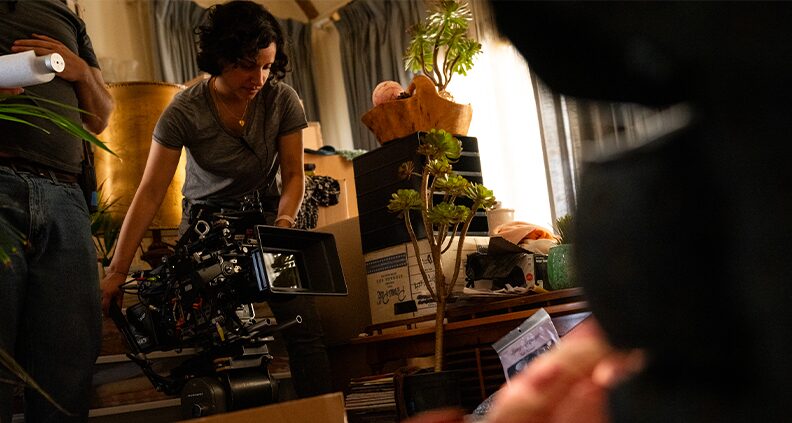
In addition to learning, being a part of Project Involve gave her the opportunity to build community: “I also loved getting to work with new collaborators and building those relationships over the course of these films.” Looking forward, Lakmé has a few projects that have completed principal photography, and she is currently in pre-production on a hybrid live action and stop motion project. Always looking to grow and learn, she says, “this will be a new style of collaborating for me and I’m excited to dive deeper into the process.”
Applications for the 2027 Project Involve program for both live-action and stop-motion animation are now open with a Non-Member deadline of July 13th. Members have until July 27th. Learn more about Project Involve here, and apply today.
For over 40 years, Film Independent has helped filmmakers get their projects made and seen. The nonprofit organization’s core mission is to champion creative independence in visual storytelling in all its forms, and to foster a culture of inclusion. We support a global community of artists and audiences who embody diversity, innovation, curiosity and uniqueness of vision. To support our mission with a donation, click here.
Keep up with Film Independent…
How David Fortune’s ‘Color Book’ Went from Amplifier to Netflix
“I had been fully prepared for a seven-year journey.” Writer/Director David Fortune was ready for the long haul when making his award-winning debut feature Color Book. “I’d heard how Charlotte Wells developed Aftersunover seven years and was ready to commit to that kind of long road with Color Book.” Things didn’t exactly turn out that way.
Color Book follows Lucky (William Catlett) who just lost his wife, and now learns how to be a single parent for his son Mason (Jeremiah Alexander Daniels), who has Down syndrome. The action takes place mostly over a single day as the pair journey across Atlanta to see Mason’s first baseball game.
Fortune had worked as a camp counselor for teenagers with Down syndrome while in college and saw the unique relationships between the parents and children there. He had wanted to write a father and son story, and his time at the camp found their way into the story. “I drew from those experiences — from the conversations I’d had with parents, from hearing both their wounds and their joys. I made sure to write from that place.”
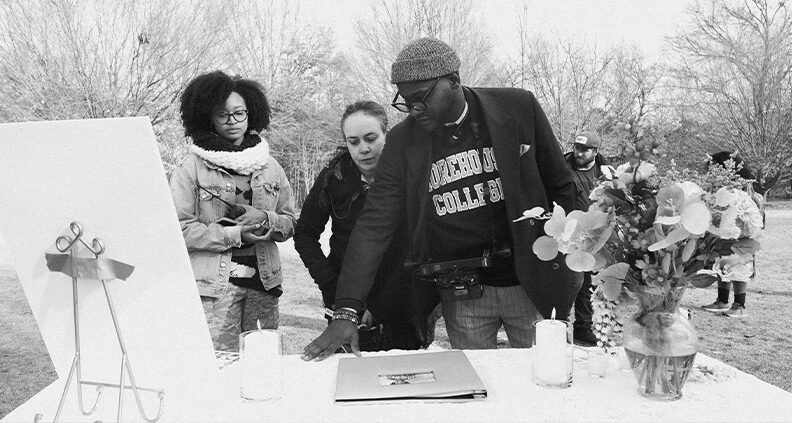
He applied to the Film Independent Amplifier Fellowship, sponsored by Netflix, while writing the script, and was accepted in 2023. “What I truly appreciated was how the program helped me nurture the film both from a screenplay perspective and a visual one,” Fortune said. “We worked through the script and the lookbook together to make sure the film was coherent in its vision.”
The Fellowship also came with a grant that Fortune used part of the grant to create a pitch video that got him into the AT&T Untold Stories competition, where he won $1 Million to make the film.
“The timeline was remarkably fast. I finished the screenplay in January, got into the fellowship in February, was accepted to pitch at the competition that February or March, pitched in June, won the million dollars, made the film over the rest of that year.”
The films power lies with its observational eye. Fortune said the aesthetic was inspired by the documentary photography of the likes of Gordon Parks, Carrie Mae Weems, and Saul Leiter, and how they investigated and showed the beauty in everyday human behavior. Because of that the film lets moments play out and is shot in wides. According to Fortune, “the goal wasn’t to make you fall in love with these characters, but to see them in their most human form.”
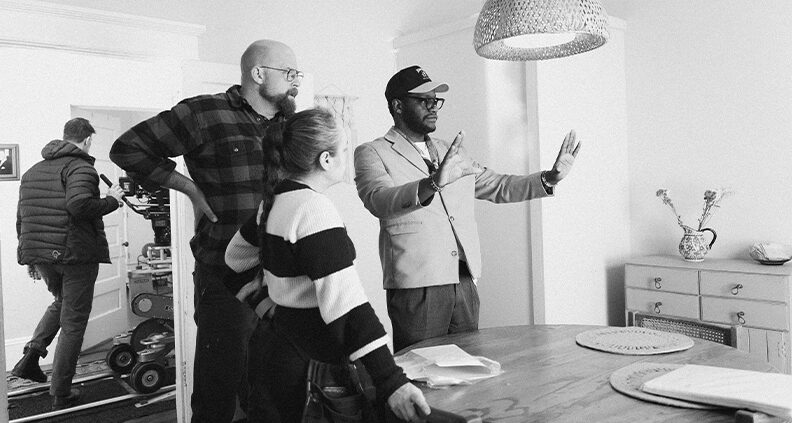
That observational style only works when you have captivating performances, and Fortune found them in William Catlett and Jeremiah Alexander Daniels’s work. He brought both actors in for a chemistry read and felt the connection immediately. Catlett felt it too. “That’s my son,” he told Fortune afterwards. “You can cast whoever you want — you’re the director — but that’s how I truly feel.”
Audiences felt that connection too. The film premiered at Tribeca in 2024, won the Audience Choice Award for Best US Feature at the Chicago Film Festival, garnered a Variety “10 Directors to Watch” nod for Fortune in 2025, and was picked up by Netflix, the co-sponsor of the Amplifier Fellowship.
“David Fortune fully embraced every opportunity within the Film Independent Amplifier Fellowship funded by Netflix, which provides grants and creative support that empower artists and their projects to thrive,” said Angela C. Lee, Director of Artist Development for Film Independent. “We are immensely proud to have supported David and this unforgettable film, and we’re thrilled that this journey has culminated with the release of the film on Netflix.”
Color Book premieres on Netflix and select theaters in New York City, Los Angeles, and Atlanta on June 19.
Featured image courtesy of Netflix.
Film Independent promotes unique independent voices by helping filmmakers create and advance new work. To support our work with a donation, please click here. Become a Member of Film Independent here.
Keep up with Film Independent…
Filmmaker Tuesday: Getting Production Value for Microbudget Films
For James Fields, microbudget is a way of life. He relishes that the unique challenges that come from making a microbudget film require you to learn every aspect of filmmaking, because with limited budget and crew, you’re going to be doing every job. “On any set I’m on, I’m asking every crew member how I can help move things forward. Having learned every aspect of production over the years has made me a better filmmaker,” he said. Now with Hieronyvision, Fields works as head of production, and helps students from film schools across the country learn about microbudget filmmaking in its Film Incubator.
Next Tuesday, Fields will be moderating a virtual discussion as part of our NanoWave: The Microbudget Film (r)evolution series. The series covers ultra-microbudget filmmaking and the filmmakers who are producing independent films with budgets under $100,000. In this edition we’ll be covering the craft of cinematography and VFX, and how to get the most out of a limited budget with what you see on screen. Fields with speak with cinematographer Juan Camilo Barriga (Ludi), VFX artist Owen Dennis (AJ Goes to the Dog Park), with more to be announced. Click here to register for the event.
In the meantime, we spoke with Fields about his history with microbudget, and what we can expect from the talk.
Tell us a little about yourself and your background with microbudget filmmaking.
I moved to Los Angeles from Park City, Utah in 1996 and got my start on the acting side before quickly realizing my real place was behind the camera. My first real project was a documentary about the demonstrations at the 2000 Democratic National Convention in LA. We just showed up with a Canon XL1, went to pre-rally meetings, and tried to understand why people were out there. After that, my creative partner and I made Pipe Dreams, following two Park City athletes trying to qualify for the 2002 Salt Lake Olympics. One made the team; one blew out his knee in the qualifying process. Triumph and tragedy built right in. That film got into Sundance, and it set me on a path of learning every aspect of production, from gripping to editing to camera. I didn’t realize microbudget was my thing at the time, but everything I was doing was microbudget. I just never really left.
Tell us what will be covered in the upcoming talk.
This one is a bit different from the usual filmmaker-focused sessions. We’re going behind the lens. We’ll be talking with cinematographer Juan Camilo Barriga from Ludi and VFX artist Owen Dennis from AJ Goes to the Dog Park. The conversation will focus on what it actually looks like to be brought onto a crew in those roles — camera choice, visual framing, special effects — and how those decisions get made and executed at the microbudget level.
Why do those films resonate with you and HieronyVision as examples of microbudget filmmaking?
AJ Goes to the Dog Park was a really passionate piece. It was shot over the course of more than a year, in the director’s hometown, calling in favors and shooting when they could. Having to use special effects to pull it off on that budget, and actually pulling it off, is exactly the kind of creative problem-solving we want to highlight.
One thing all of these films have in common is a skeleton crew where everyone is wearing multiple hats. That’s something I love about independent filmmaking at this level. On any set I’m on, I’m asking every crew member how I can help move things forward. Having learned every aspect of production over the years has made me a better filmmaker, and these films are a direct expression of that ethos.
We work with Film Independent on the Film Incubator with ten students from programs like Yale, Columbia, UCLA, and CalArts. One of last year’s participants recently told me she made her graduate project as a feature film for $3,000. She said we inspired her not to make a short, but to go out and make a feature. That’s exactly what we’re going for. And honestly, she inspired us right back.
Why do you think microbudget and ultra-microbudget filmmaking have become such a hot topic in the independent film world in recent years?
There’s a real and growing divide between the upper echelon of the film industry and the filmmakers trying to break in below it. A lot of people who were working at that upper level, writers on prestige shows, crew members on big productions, are out of work now. Production is leaving Los Angeles. The gap between where new filmmakers start and where the industry operates has never felt wider.
But what’s shifting is the understanding that you don’t need $1 million or even $100,000 to make a film. The technology has genuinely caught up. I shot a film recently on an iPhone. If you know what you’re doing as a cinematographer, your phone is a legitimate tool, and you just saved yourself a significant equipment rental. I walked through the streets of Vienna, Austria with a Blackmagic 6K shooting a documentary and nobody said a word. I’ve never pulled a permit for anything I’ve filmed in LA. If you want to get it done, you can get it done.
The other thing is that waiting around for permission has a real cost. I spent years doing that myself. My creative partner on Pipe Dreams spent years writing every day, working a waiter job, before he got there. That path still exists, but it’s harder than ever to get through the door. Ultra-microbudget gives you a way to not wait, to go out and make the thing, build the experience, and have something to show when you do eventually get in the room. Give me a strong script with two characters and a good sound person, and I can make a film anywhere. That’s not a fantasy. That’s just where the technology and the craft are right now.
Click here to register for the online discussion happening next Tuesday at 5:30pm PT.
Film Independent promotes unique independent voices by helping filmmakers create and advance new work. To support our work with a donation, please click here. Become a Member of Film Independent here.
Keep up with Film Independent…
Film Independent Presents the World Cine-Cup 2026
They call it the Beautiful Game. And it is without a doubt it’s THE international game. So it seems fitting that football is a favorite subject for films around the world.
This summer, there’s a little competition bringing the beautiful game to Film Independent’s backyard. And to celebrate, we’re running our own competition where we see which football film YOU love the best, and takes home the cup. We’re putting pieces of art head-to-head in a seeded knockout-style competition, to see whose mise en scène reigns supreme. Head to our Instagram account to vote for your favorites. We’re starting the voting tomorrow in Instagram Stories, and will be having matches through the next month.
While the World Cup has expanded its schedule to a dizzying 104 matches between 48 teams, we’re keeping it to a tight 16 films. Everyone knows that the knockout rounds are the most fun anyways.
Today we’re unveiling the list of competitors, giving you a little about each film, and setting the schedule for the Round of 16. The winners from each of these matches will move on to face another film until a winner is crowned.
(Editor’s Note: We acknowledge the greatness of Bend it Like Beckham, but we’ve asked it to hang up its boots and sit this one out in order to give other films a fighting chance.)
Let’s kick things off.
Match 1

8. The Hand of God (2021) 9. Rudo y Cursi (2008)
In a match of highbrow vs. low, Oscar-winner Paulo Sorrentio tells a Neapolitan coming-of-age story in the age of Diego Maradona in The Hand of God, while Diego Luna and Gael Garcia Bernal winnow away their chances at football stardom as two small-town stepbrothers whose talent takes them to cosmopolitan Mexico City and all of it’s temptations in the outrageous comedy Rudo y Cursi.
Where to watch:
The Hand of God: Netflix TRAILER
Rudo y Cursi: Disc TRAILER
Match 2
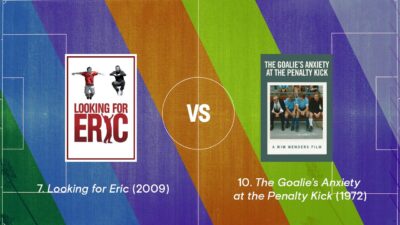
7. Looking for Eric (2009) 10. The Goalie’s Anxiety at the Penalty Kick (1972)
It’s England v. Germany in this match between two European masters. Looking for Eric, directed by Ken Loach, is about a man whose life has fallen apart, and visions of his favorite footballer try to help his life turn around. The angsty The Goalie’s Anxiety at the Penalty Kick, directed by Wim Wenders, follows an off-duty goalie in post-war Germany who just might have gotten away with murder.
Where to watch:
Looking for Eric: Amazon TRAILER
The Goalie’s Anxiety at the Penalty Kick: Criterion Channel CLIP
Match 3
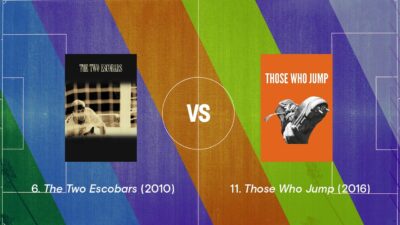
6. The Two Escobars (2010) 11. Those Who Jump (2016)
Two documentaries on opposite sides of the spectrum face of in this match. The Two Escobars is one of the films that made ESPN’s 30 for 30 a phenomenon. It’s an account of murdered Colombian footballer Andrés Escobar and how his paths crossed with drug kingpin Pablo Escobar, told with Hollywood sheen by American filmmakers Jeff and Michael Zimbalist. Those Who Jump was filmed by co-director Abou Bakar Sidibé, a Malian migrant as he films his life in a refugee camp in Morrocco, learning how to shoot video, and playing football with his mates to pass the time as they plan a way to get to Europe.
Where to watch:
The Two Escobars: Disney+ TRAILER
Those Who Jump: Disc TRAILER
Match 4
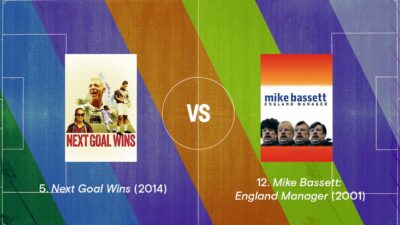
5. Next Goal Wins (2014) 12. Mike Bassett: England Manager (2001)
Sports fans love a good storyline. This match is full of them. We have two films that focus on the art of managing a football team, two films that are about people with questionable qualifications, two films that went on to have remakes (the bumbling Mike Bassett is definitely one of the models for Ted Lasso). More importantly, you have two films that will give you a good time watching some underdogs try to make good.
Where to watch:
Next Goal Wins: Amazon, Apple TRAILER
Mike Bassett: England Manager: Amazon, YouTube TRAILER
Match 5
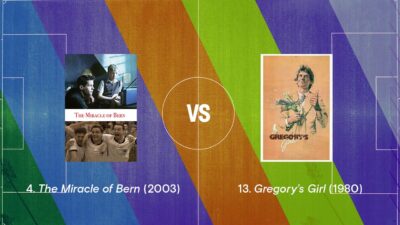
4. The Miracle of Bern (2003) vs. 13. Gregory’s Girl (1980)
Somehow whenever a woman plays football in a film, the title is still named after the guy (we’re looking at you, Bend it Like Beckham). Gregory’s Girl is a hormonal yet sweet comedy by Bill Forsyth about a hopeless lad in love with the captain of the girls’ football team, Dorothy. Another football obsessed lad, Matthias, bonds with his father, a POW returned home, over the World Cup in a complex drama about Germany finding a path forward after its Nazi years in The Miracle of Bern.
Where to watch:
The Miracle of Bern: YouTube TRAILER
Gregory’s Girl: Amazon, Apple TRAILER
Match 6
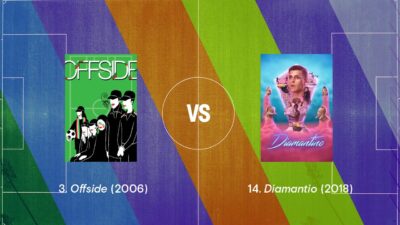
3. Offside (2006) vs. 14. Diamantio (2018)
These two films look at the political side of football in completely different ways. Offside focuses on Iranian women who disguise themselves as men to get into a World Cup qualifying match. Diamantino is a surreal take on a fall from grace narrative where political forces pull on the player who lost the World Cup for his country as he starts a new life adopting a young refugee.
Where to watch:
Offside: Amazon, Apple TRAILER
Diamantino: Amazon, Apple TRAILER
Match 7
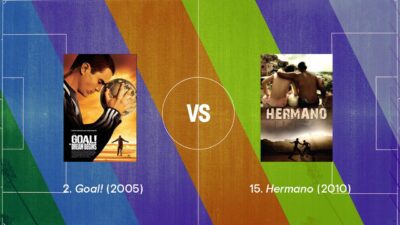
2. Goal! (2005) vs. 15. Hermano (2010)
Part of what makes football so beautiful is how egalitarian it is. All you need is a ball, some sort of goal, and your mates. Both Goal! and Hermano are rags-to-riches tales around becoming a football star. Goal! spawned two sequels, and is about a Mexican kid in LA being invited to try out for Newcastle United in England. Hermano is an under-seen Venezuelan film about two brothers of different temperaments, and how their paths diverge when opportunity knocks.
Where to watch:
Goal: YouTube TRAILER
Hermano: Amazon, Apple TRAILER
Match 8
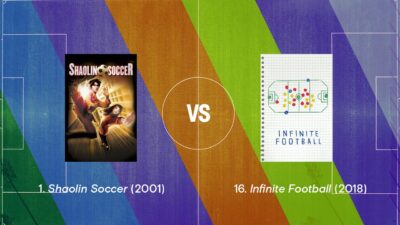
1. Shaolin Soccer (2001) vs. 16. Infinite Football (2018)
This match features two oddballs. Shaolin Soccer when it came out in 2001 was hailed as the return of great physical comedy. It’s weird, it’s wild, it’s full of heart, and has some awesome action scenes. Infinite Football is a 2016 doc about an amateur manager who is developing a whole new system to play the game. He’s idealistic, he’s philosophical, and might be mad, but it’s a thrill to see him put its system in place and try to fix football and the world.
Where to watch:
Shaolin Soccer: Amazon, Apple TRAILER
Infinite Football: Apple TRAILER
Film Independent promotes unique independent voices by helping filmmakers create and advance new work. To support our work with a donation, please click here. Become a Member of Film Independent here.
Keep up with Film Independent…
INTERVIEW: Writer/Director Jing Ai Ng on Making ‘Forge’ The Genuine Article
As Writer/Director Jing Ai Ng points out, art forgery isn’t the easiest way to make a buck. It takes deep study, craftspersonship, and the chutzpa to pull it off. But it attracted Ng as a subject for her new film Forge, which is in theaters now. It must be how those same qualities are what are needed to be an indie filmmaker as well.
In Forge, siblings Coco and Raymond (Andie Ju and Brandon Soo Hoo) get dragged into a major artworld con after making small time forgeries in Miami, but the FBI and Agent Emily Lee (Kelly Marie Tran) are hot on their trail. Ng took the script for Forge through the Film Independent Screenwriting Lab, and Fast Track. Producer Liz Daering-Glass also took the project through the Producing Lab. We spoke about how those programs shaped the films journey, and how the line between art and theft isn’t as clear as we think it is.
You’ve mentioned that a lot of your earlier projects were more personal. What appealed to you about the crime genre for this one?
I grew up between Malaysia and Miami. My family splits time between those two places. Crime films were pretty standard fare for us, whether it was Hong Kong crime movies or Miami Vice. Culturally, the genre was very much embedded in my imagination. But I’m also genuinely fascinated by white-collar crime and what it means in America specifically. A lot of people don’t know this, but the art forger behind roughly $80 million worth of fraudulent art in New York was a Chinese man who fled the country and was never interviewed. I was really drawn to the idea of imagining a story around an art forger.
You mentioned that you got to speak with some real-life art forgers. How did you get in contact with them, and was there anything surprising you learned?
Some forgers are essentially public figures who are willing to talk. Others actually reached out to me. Either way, they were eager to share their side of things, which I found really interesting. As for what surprised me, more than any specific detail, it was understanding their motivations, which often seemed genuinely confused in a fascinating way. Art forgery isn’t a simple cash grab. You need a very particular set of skills to pull it off. So hearing how they each got into it in the first place was the most compelling thing for me.
Do you see any similarities between forging art and directing a film?
Absolutely! You’re actually the first person to ask me that, though it’s something I think about quite often. I think there are real arguments to be made across all art forms, and cinema is no exception, when it comes to inspiration and where you draw your references from. Every artist is obviously pulling from people who came before them. What portion of that is inspiration and what portion is a direct lift is genuinely up in the air — especially with cinema, because it’s such a dense cultural thread. I think every artist grapples with that to some extent, and film directors perhaps especially so.
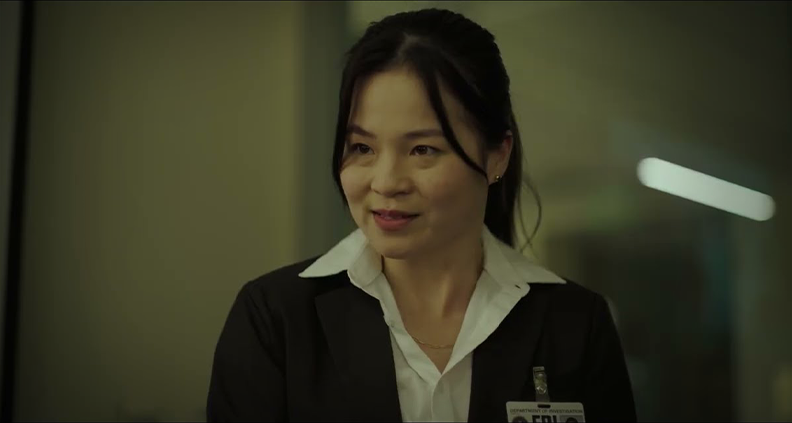
You have three Asian leads in the film. Why was that important to you, and what roadblocks did you encounter along the way?
When I first brought the film to the Film Independent Screenwriting Lab, the script was actually about two best friends, one Asian, one not. When I started reworking it to be more personal and closer to my own experience, the characters all became part of the same family. The FBI agent was always Asian. And once I was making this film with specific people in my head, it became a non-negotiable that I remain faithful to that vision and to my mission of making sure there are more films with Asian leads in America.
What’s almost funny is that Forge is a genre film with a premise I think a lot of people find genuinely appealing. Crime films have broad appeal, and art crime has its own fascination. It just happens to be a film where the art forgers are Asian. I thought that would make it a relatively simple pitch. It turned out to be far more complicated than I expected. I’m really glad I stayed stubborn throughout the entire process.
Tell me about your experience in the Screenwriting Lab and what changes came out of it.
As I mentioned, the script was completely different when I went through the Lab. I had two best friends as the leads, one of whom was the Asian character, Coco. The feedback I got from everyone in the lab was that they loved Coco but couldn’t connect with the other characters. I realized pretty quickly that it was because I was writing Coco from a deeply personal place. I felt close to her even though she was a criminal. The lab, both inadvertently and explicitly, encouraged me to be more true to myself in telling the story, even within a genre framework. That process really opened up my heart and mind as a director to be unapologetically myself.
I was twenty-five, maybe twenty-six, when I went through the Screenwriting Lab. Having that support system and that encouragement to be unapologetic about what I wanted to write and where I wanted to take the story catapulted the script from an early stage to where it ultimately ended up.
Can you tell me about your experience with Fast Track and how that contributed to getting the film made?
We went into Fast Track with a financing gap to fill and pitched to a lot of people, many of whom I’m still in touch with. I actually work with one of the companies we pitched to, Black Bear, though I wasn’t represented by them at the time. It was a great way to get in front of different people. And although we didn’t meet any of our executive producers directly through Fast Track, someone we met there connected us to other financiers. They said something like, “It’s not my cup of tea, but I know someone who would love it.” That person has been integral to the whole process.
What would you say to someone thinking of applying to a Film Independent Artist Development program?
I’d really like to encourage people to apply to the Labs — no matter how many times it takes or how long the process is. It was a genuinely important part of reaffirming myself as a writer. I didn’t know anyone when I applied; it was my first lab, my first development program. The lab took me in completely blind, and I’m so grateful for that. I hope that message comes through, but if it doesn’t: submit your scripts and your ideas. We always love to hear them.
Watch our Q&A with Jing Ai Ng and Kelly Marie Tran here:
Images courtesy of Utopia
Forge is playing in select theaters and will be coming to a home release later this summer.
Film Independent promotes unique independent voices by helping filmmakers create and advance new work. To support our work with a donation, please click here. Become a Member of Film Independent here.
Keep up with Film Independent…
Don’t Miss Indies: What to Watch in June
It’s summer! Time for coming-of-age romance in all forms, whether it’s horror in a small town in Australia, queer and questioning crushes in a small town in Oregon, family pressures in a Paris suburb, or even tragedy on a private island in Greece. It’s a season to find out who you really are, and every town on the map offers indie filmmakers a vehicle to explore this classic setup for authentic storytelling.
BURT
When You Can Watch: June 1
Where You Can Watch: Film Independent Presents
Director: Joe Burke
Cast: Catlin Adams, Burton Berger, Oliver Cooper
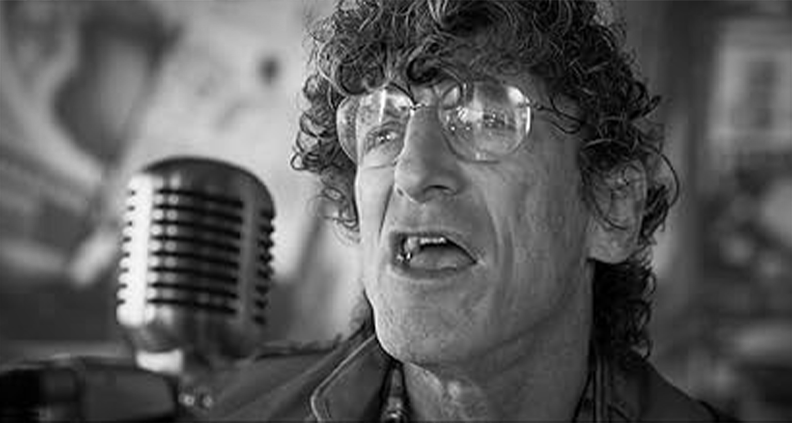
Why we’re excited: Two days with two guys, one of which is 69-year-old singer/songwriter Burt (Burton Berger) and the stranger claiming to be his son, Sammy (Oliver Cooper, Project X). Cooper also co-wrote the script with director Joe Burke (Four Dogs) with a dry wit and understated humor that mixes dreams and music with Parkinson’s disease and the neverending task of paying rent. Berger is the picture of a struggling artist, not giving into cynicism but also maybe too trusting and vulnerable to underhanded schemes. Not everyone in Burt’s life embraces Sammy’s arrival the way he has, and it becomes clear that Sammy has more than one reason for making an appearance at this point in time. Though the script is fictionalized, Burt is inspired by Berger’s own life. Burke met Berger at a Malibu restaurant fifteen years ago and felt compelled to bring his story to screen. “He’s special,” Burke told Arizona’s Family, “his music is special, his soul is awesome.”
THE BIRTHDAY PARTY
When You Can Watch: June 5
Where You Can Watch: Select Theaters and Streaming
Director: Miguel Ángel Jiménez
Cast: Willem Dafoe, Vic Carmen Sonne, Emma Suárez
Why we’re excited: Spanish filmmaker Miguel Ángel Jiménez (Window to the Sea), adapts Panos Karnezis’s 2007 novel into this lavish tragedy set in the 1970s. Come away to a private Mediterranean island, where the daughter of filthy rich Marcos Timoleon (Spirit Award winner Willem Dafoe, The Lighthouse) is about to have the worst day of her young life. The birthday girl (Sofia, played by Vic Carmen Sonne, The Girl with the Needle) receives a hodgepodge of party guests that reads more like a networking mixer for billionaires than the friend group of a 25-year-old girl. Everyone here is under the thumb of her father, including – as we are about to understand to a heartbreaking degree – Sofia herself. Even Sofia’s step-mother, Olivia (Emma Suárez, Julieta) has attended the party with her lawyer, hoping to extricate herself from this family at last. But as one pivotal day unfolds, secrets and schemes unravel, pitting father and daughter against one another in a life-changing confrontation.
THE LITTLE SISTER
When You Can Watch: June 5
Where You Can Watch: Theaters
Writer/Director: Hafsia Herzi
Cast: Nadia Melliti, Park Ji-min, Amina Ben Mohamed
Why we’re excited: Nadia Melliti won Best Actress at the 2025 Cannes Film Festival for her first role as Fatima, the 17-year-old French-Algerian student starting university in Paris. French-Tunisian actress and filmmaker Hafsia Herzi (You Deserve a Lover) adapted the script from an autofictional novel by French-Algerian author Fatima Daas about coming of age as the youngest daughter of a Muslim family in the Paris suburbs. As Fatima explores her competing interests, identities and values, she has to make decisions about how she will handle her own life. “I want to shine a light on people we rarely see on screen,” Herzi told Variety. “I’ve rarely seen a proudly Queer North African character on screen, even though I know so many women like her. I had to tell her story.”
LEVITICUS
When You Can Watch: June 15
Where You Can Watch: Film Independent Presents
Writer/Director: Adrian Chiarella
Cast: Joe Bird, Stacy Clausen, Jeremy Blewitt
Why we’re excited: Australian filmmaker Adrian Chiarella’s debut feature tackles homophobia and conversion therapy in a romantic coming-of-age horror story. Joe Bird (Talk to Me) and Stacy Clausen (True Spirit) play Naim and Ryan, 17-year-olds in small town Australia. When the classmates kiss for the first time, it both opens up a world of excitement and a world of hurt – personified in the healer who arrives to cure them of their attraction. The ensuing ceremony seems to deal less with healing and more with summoning supernatural forces to test and execute punishment on either boy who succumbs to temptation. The only safe move is to stay away from each other, since the avenging angels that haunt the young lovers do so by taking on their own form. Though Naim never knows if the object of his desire is actually Ryan or the imposter spirit (and vice versa), the intensity of their feelings makes it impossible to stay away.
GAIL DAUGHTRY AND THE CELEBRITY SEX PASS
When You Can Watch: June 22
Where You Can Watch: Film Independent Presents
Director: David Wain
Cast: Jon Hamm, Zoey Deutch, Miles Gutierrez-Riley
Why we’re excited: David Wain (Wet Hot American Summer) highlights the personality and distinctive features of Los Angeles in his latest zany comedy about a small-town hairdresser (Zoey Deutch, Nouvelle Vague) whose soon-to-be husband has just invoked a celebrity sex pass to sleep with an icon he might never expect to meet in Kansas. Now in order to save her relationship, Gail has to even the score. Accompanied by her gay best friend Otto (Miles Gutierrez-Riley, Smile 2) and accruing teammates along the way, Gail scours LA in a quest for Jon Hamm and the kind of payback only he can offer. Gail’s wedding is only two weeks away, and the usual jitters are heightened by Gail’s LA adventures, including run-ins with paparazzi, CAA, a former Mad Men costar, and – perhaps inevitably – assassins. Can Gail question everything and reach a result that is truly satisfying?
MADDIE’S SECRET
When You Can Watch: June 23
Where You Can Watch: Film Independent Presents
Writer/Director: John Early
Cast: John Early, Eric Rahill, Kate Berlant
Why we’re excited: Comic actor John Early (Search Party) wrote, directed and starred in this comedic tribute to TV movies and glowy nostalgia. Inspired by an LA screening of one such movie of the week starring Tori Spelling and Kellie Martin, Early embraced the potential of low budget production to explore the strange new world of food influencing (and fulfill his lifelong dream to play a classic ingenue). Maddie Ralph (played by Early) is a great chef – at home. She is too intimidated to cook for anyone but her husband (Eric Rahill, Friendship) and best friend, Deena (Kate Berlant, Once Upon a Time… in Hollywood). But a chance video post goes viral, throwing Maddie in the spotlight at the trendy content creation company where she works. Now promoted to onscreen talent, Maddie must face her stressful new career alongside her old struggle with bulimia. Film Independent members Tyler Boehm and Chris Quintos Cathcart are executive producers.
GIRLS LIKE GIRLS
When You Can Watch: June
Where You Can Watch: Film Independent Presents
Director: Hayley Kiyoko
Cast: Maya da Costa, Myra Molloy, Zach Braff
Why we’re excited: When pop star Hayley Kiyoko recorded her song, Girls Like Girls in 2015, she told US Weekly, “I loved the idea of how all these guys always are stealing other guys’ girls and I was like, ‘There’s no female anthem for a girl stealing another guy’s girl,’ and that is the coolest thing ever.” Now Kiyoko’s directorial debut picks up the thread, following a music video in 2015 and a YA novel in 2023. The coming-of-age love story focuses on Coley (Maya de Costa, Under the Bridge) who is 17 and newly bereaved. Moving to rural Oregon to live with her estranged father (played by Zach Braff, Spirit Award winning Garden State), she is starting over. But meeting the popular and glamorous Sonya (Myra Molloy, He’s All That) awakens new feelings in both of them, introducing a summer of discovery.
THE INVITE
When You Can Watch: June 26
Where You Can Watch: Theaters
Director: Olivia Wilde
Cast: Seth Rogen, Olivia Wilde, Penélope Cruz, Edward Norton
Why we’re excited: After her Spirit Award winning Booksmart, Olivia Wilde’s venture into marital sex comedy features four well-known faces in indie cinema. One night, one apartment, for a dinner party that is probably not the real reason for said invitation. Wilde (Don’t Worry Darling) and Spirit Award nominee Seth Rogen (The Studio) play a couple in a shaky marriage. Intrigued by the overheard pleasures of their upstairs neighbors, Angela (Wilde) takes advantage of the fact that her teenage daughter is away and invites the couple over for dinner. Enter Pina and Hawk (Spirit Award winner Penélope Cruz, Vicky Cristina Barcelona and Spirit Award nominee Edward Norton, Birdman), the comparatively suave and exciting therapist and ex-fighter, respectively. The evening unfolds with tension that gives way to a comedic exploration of long-term relationships, and taking the bitter with the sweet. Film Independent members Alex Astrachan and Chelsea Barnard are executive producers.
ROMERÍA
When You Can Watch: June 26
Where You Can Watch: Theaters
Writer/Director: Carla Simón
Cast: Llúcia Garcia, Mitch Martín, Tristán Ulloa
Why we’re excited: The family drama from Spanish filmmaker Carla Simón (Alcarràs) stems from her frustration and pain in reconstructing her own family history. Growing up in the 80s and 90s as an orphan of AIDS put Simón in an odd relationship with extended family, and with herself. In Romería, Marina (newcomer Llúcia Garcia) is an easy-going teen on a fact-finding mission in order to complete her university grant application. With her mother’s diary as a guide, Marina meets extended family on Spain’s Atlantic coast and begins to uncover secrets, including details about her parents that were previously unknown. Simón credits the visual medium of film for her own healing in recreating her personal story. “When you can’t shape your identity through others, you can invent it through creation,” she told Cannes. “Cinema is there for that: creating images that don’t exist.”
PROGRAMMER’S PICK: CORONER TO THE STARS
When You Can Watch: May 20
Where You Can Watch: Film Independent Presents
Directors: Ben Hethcoat, Keita Ideno
Cast: Thomas Noguchi, George Takei, Janice Hahn
Why we’re excited: From Film Independent Lead Programmer Jenn Wilson–
Ben Hethcoat and Keita Ideno’s first foray into feature documentary territory is a fascinating tale of LA’s most famous coroner, Dr. Thomas Noguchi who served as Chief Medical Examiner-Coroner from 1961-1982. Dr. Noguchi worked on some of LA’s most notorious death investigations including Marilyn Monroe, Natalie Wood, Robert F. Kennedy, William Holden, and the Manson Murders. Despite his exemplary work, Noguchi stirred up controversy when he would give press conferences and release the truthful details of celebrity deaths; something that offended the Hollywood Studio System who was secretive about such information. Dr. Noguchi survived one early attempt by the LA Board of Supervisors to remove him, but he didn’t survive the second attempt. Despite his demotion, he dutifully served LA County as a medical examiner for several years after. Hethcoat and Ideno’s film is an intriguing exploration of a man of science and truth stuck in an extremely political office that shifts with the tide of opinion.
KEY
Film Independent Fellow or Member
Film Independent Presents Screening, Q&A
Microbudget
Filmmaker or Lead Characters of Color
Film Independent Spirit Award Winner or Nominee
Female Filmmaker
LGBT Filmmaker or Lead LGBT Characters
First-time Filmmaker
LA Film Festival Winner or Nominee
Featured Image – The Birthday Party; Courtesy Fasten Films
For over 40 years, Film Independent has helped filmmakers get their projects made and seen. The nonprofit organization’s core mission is to champion creative independence in visual storytelling in all its forms, and to foster a culture of inclusion. We support a global community of artists and audiences who embody diversity, innovation, curiosity and uniqueness of vision. To support our mission with a donation, click here.
Keep up with Film Independent…
How YouTube Helped Indie Filmmakers Make Horror Hits ‘Backrooms’ & ‘Obsession’
Pardon us for stating the obvious, but it’s a great time to be a horror fan. In the month of May alone, this year’s box office gave us a new, original horror film every week. Interestingly, two of these films, Obsession and Backrooms, were made by directors in their 20s who got their start on YouTube. Obsession is already a global hit, barreling towards $100 million, and as of now, Backrooms is likely to become another box office hit upon its May 29th release.
The YouTube to theatrical horror pipeline is interesting for several reasons. Filmmakers from all over the world, especially in the independent space, should be taking notes.
For starters, it’s important to note that horror creators have always utilized the Internet as a launchpad. Paranormal Activity and The Blair Witch Project’s respective viral marketing campaigns catapulted those low budget films to historic success. David F. Sandberg and Fede Álvarez posted short films online that led to fruitful careers. The Terrifier films used social media marketing to become a cult hit. Now, Obsession’sdirector Curry Barker and Backrooms creator Kane Parsons are using YouTube as a proving ground for the next wave of horror auteurs. They follow in the footsteps of the Philippou brothers, who built a YouTube following that led to A24’s highest-grossing horror film (so far).
YouTube gives filmmakers the opportunity to prove themselves, no connections or film school required. You can make something for not a lot of money and distribute it for free. This shows investors you know how to work within a budget. It’s also a way to practice your craft and develop your visual storytelling style. Furthermore, your content acts as a proof-of-concept that helps sell your project to buyers. One great thing about the Internet is how it allows niche voices and stories to find a global audience. You can take your specific brand straight to the audience, rather than catering to studio parameters to secure a release.
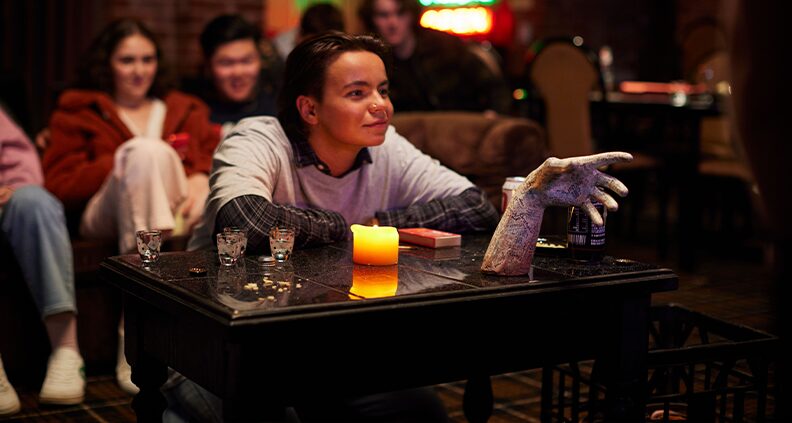
YouTube has always been a distribution platform for filmmakers, but as this latest wave proves, it’s also a way to build an audience. In today’s climate, this is critical. Distributors and producers often speak of the challenges in bringing younger audiences to theaters, but these creators have leveraged the very thing competing for their attention – the Internet – to do just that. Obsession has brought Gen Z to the theater in droves, posting one of the biggest second weekend spikes at the box office. During a Future of Filmmaking panel at Cannes, three experts in film finance discussed what they consider ‘the new reality of financing: rather than evaluating individual films on their artistic merits, investors now need to see a pre-existing relationship with an audience.’ As the careers of Kane Parsons, Curry Barker, and the Philippou brothers showcase, YouTube is a great place to start.
The Philippou brothers grew up in a working-class suburb in Adelaide, far away from Hollywood, where they started posting homemade videos on their YouTube channel RackaRacka. Danny Philippou described it as ‘very specific content for a very specific audience’. The twins channeled their shared love of wrestling and backyard stunts into action-driven videos that highlighted their horror comedy sensibilities. Their first successful video reached 7 million views in a week, and the channel now has close to 7 million subscribers. After making contacts in the Adelaide film scene on the set of Jennifer Kent’s Babadook, the Philippou brothers made their directorial debut with Talk To Me, a film that grossed $92 million worldwide off a $4.5 million budget. This current highest grossing horror film for A24 now has a sequel in development.
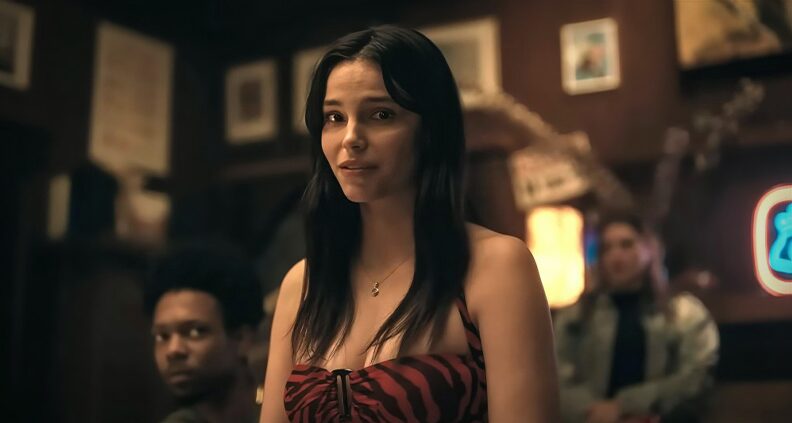
Curry Barker’s stratospheric success began with his sketch comedy group, ‘that’s a bad idea’. Formed with Cooper Tomlinson, the duo found an audience by posting short comedy and horror films on YouTube. Similar to the Philippou brothers, Barker used this as a way to hone his craft, calling it his ‘film school outside of film school’. He made his first feature, Milk & Serial, for $800 over four months. After Barker was unable to secure traditional distribution for the film, he decided to put it up on YouTube, where it became a viral sensation and got him agents at UTA. But it’s his sophomore feature, Obsession, that catapulted Barker to his current status as one of the most in-demand horror filmmakers today. After stoking audiences’ appetites at the Toronto Film Festival, the film was acquired by Focus for $15 million. Released May 15, it’s already grossed over $80 million worldwide off a $750,000 budget. Riding high, Barker is signed up for a new Texas Chainsaw Massacre movie with A24, has a new original film already in post called Anything But Ghosts, and was recently offered $10 million for his next original project by a studio, sight unseen. Talk about bypassing the gatekeepers.
Kane Parsons, the youngest filmmaker of the bunch at 20, calls YouTube a cultural reference point for his generation. Like Barker and the Phillippou bros, it allowed him to develop his creative sensibilities. Parsons posted his viral short The Backrooms (Found Footage), on his YouTube channel Kane Pixels when he was just 16. He followed this up with an entire web series for the concept that showcased his VFX skills and further developed its lore and audience base. This impressive world-building led to a feature adaptation with A24, starring Oscar nominees Chiwetel Ejiofor and Renata Reinsve, which is tracking a $45 million plus opening weekend. Parsons self-taught himself VFX in middle school using— what else— YouTube tutorials. He believes artists need little more than a ‘brain’ to find a way to make something, and wants to see more of this innovative spirit in action. If the current boon of original horror films is any indication, cinephiles around the world would agree.
YouTube is a way to hone your skills, create a product, and find an audience. These filmmakers’ online subscribers are following them to the theater, turning their debut features into unprecedented hits. But the takeaways from their successes are relevant to any filmmaker, regardless of what genre they gravitate towards. If nothing else, YouTube can be a way to find your people. It’s also, importantly, a way to sidestep the traditional gatekeepers guarding a gate that feels increasingly narrow and too crowded to fit through.
The Hollywood Reporter encapsulated it perfectly: “’The moment is here,’ says one studio head. ‘YouTube is blessing these filmmakers and we are struggling to catch up. Right now, it’s about us not being second to the party.’” As usual, the system has realized too-late what creators and platforms like YouTube understood all along: we don’t need permission.
Film Independent promotes unique independent voices by helping filmmakers create and advance new work. To support our work with a donation, please click here. Become a Member of Film Independent here.
Featured Image: Backrooms. Courtesy of A24
Keep up with Film Independent…