
Gregg Araki is Back, and We’re Hot and Ready
To call Gregg Araki’s work “important” would be an understatement, borderline insulting even. His Teen Apocalypse trilogy—Totally F***ed Up (1993), The Doom Generation (1995), and Nowhere (1997)—captured contemporary teen angst in all its chaotic glory without fear or filter. These films were acts of rebellion in their dogged exploration of sexuality, drugs, and coming of age at the turn of the 21st century. In a way, they represented the yang to the yin (or vice versa, depending on interpretation) that was the John Hughes teenage depiction that dominated the 1980s. With the founding of Strand Releasing in 1989—a film distributor focused on supporting cutting-edge LGBTQ stories—and the New Queer Cinema movement emerging in the early 1990s, Gregg Araki naturally became an integral part of that piece of cinema history. He brought the “weird” and “bad” youth, characters from the fringes of society, to the forefront of auteur cinema. So, his work is more than just important. It’s f***ing necessary.
The Spirit Awards nominee—Best Director, Mysterious Skin (2004)—is finally releasing his highly anticipated upcoming feature titled I Want Your Sex, in true Araki fashion. It’s set to premiere at this year’s Sundance Film Festival, starring Olivia Wilde and Cooper Hoffman.
Described as a “dominatrix drama,” it follows Elliot (Hoffman) who lands a job working for acclaimed artist and provocateur Erika Tracy (Wilde). She sets her sights on him and turns him into her sexual muse, his fantasy turned reality, but it leads them on a more fiery and vice-filled path than Elliot had imagined. They are joined by seasoned players Johnny Knoxville, Daveed Diggs, and Margaret Cho; up-in-coming players Chase Sui Wonders and Mason Gooding; and music sensation-turned actor Charli XCX. She’s an inclusion that furthers excitement, and shouldn’t come as a surprise to anyone familiar with Gregg Araki.
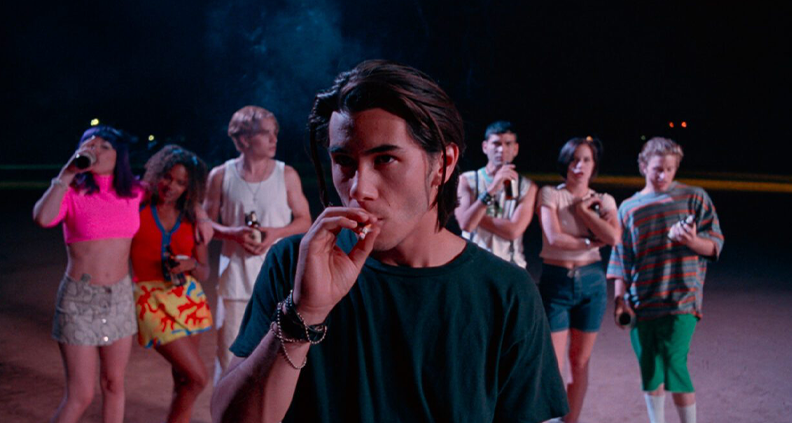
It’s a collaboration that points to his close attention to music and style, two key elements that distinguish himself from his peers through his lens. He heavily uses the sounds of alternative music—Cocteau Twins, Slowdive, Lush, Babyland, etc.—which acts as both a device to create mood and a guiding star for characters. Beyond the screen, these song choices are so tied to passionate and sustained subcultures and identities that they’ve played a critical part in establishing Araki’s cult following. This musical selection pairs wonderfully with his equally alternative visual style, accomplished by two main factors: costume design and set design.
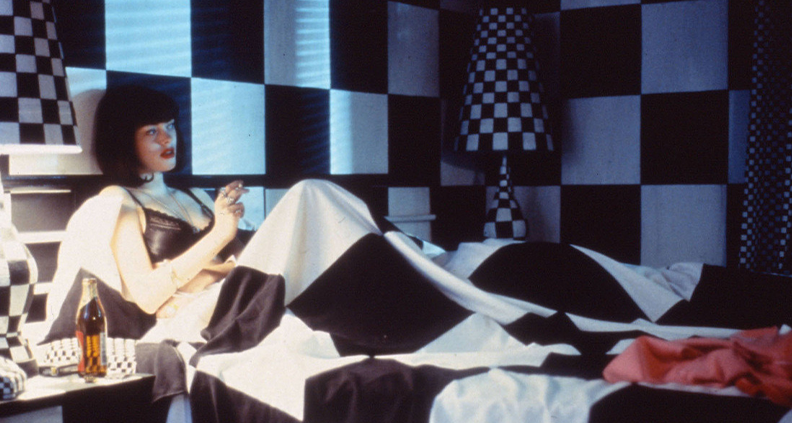
Costumes fluctuate between effortlessly cool street fashion looks, like James Duval in any of his Teen Apocalypse roles, to eclectic pattern and color driven looks, like Rachel True in Nowhere or Haley Bennett in Kaboom (2010). In regards to set design, there’s a nice balance of indoor and outdoor sets, but it’s the former as seen in The Doom Generation that’s worth spotlighting. It holds one of the most, if not the most, iconic sets in Araki’s filmography: the black and white checkered room. It’s maximalist, yet polished. Hence, his apparent magnetic appeal to unconventional-leaning creatives as collaborators and cinephiles as consumers.
It’s been more than a decade since his last feature film, although he’s kept busy on the television side of things. He created the series Now Apocalypse (2019) for Starz and directed an episode for Netflix’s Monster: The Jeffrey Dahmer Story (2022), which were exciting projects in their own right, but his artistic vision on the big screen has been sorely missed. No other writer-director can successfully integrate sexual confidence, artistic flare, and foreboding quite like he can so consistently. A promise made, stylistically and authentically, since his incredibly obscure and independent debut Three Bewildered People in the Night (1987).
Critics and fans are understandably eager for I Want Your Sex. It’s turning out to be a bold introduction to a new generation, and a reintroduction to generations who’ve been there since the beginning. As long as Gregg Araki creates until the end of the world really does happen, as he likes to explore so much, we’ll die happy.
For over 40 years, Film Independent has helped filmmakers get their projects made and seen. The nonprofit organization’s core mission is to champion creative independence in visual storytelling in all its forms, and to foster a culture of inclusion. We support a global community of artists and audiences who embody diversity, innovation, curiosity and uniqueness of vision. To support our mission with a donation, click here.
Keep up with Film Independent…